Anatomically Influenced Running Shoes
Shoe marketing is grinding hard on anatomy right now. Trend Hunter has flagged “anatomically influenced running shoes,” while deal and gear coverage around Hoka, Skechers, and 2026 men’s running shoe…
Clay Masterson, Backcountry Conditioning Expert & Gear Pragmatist·updated July 07, 2026
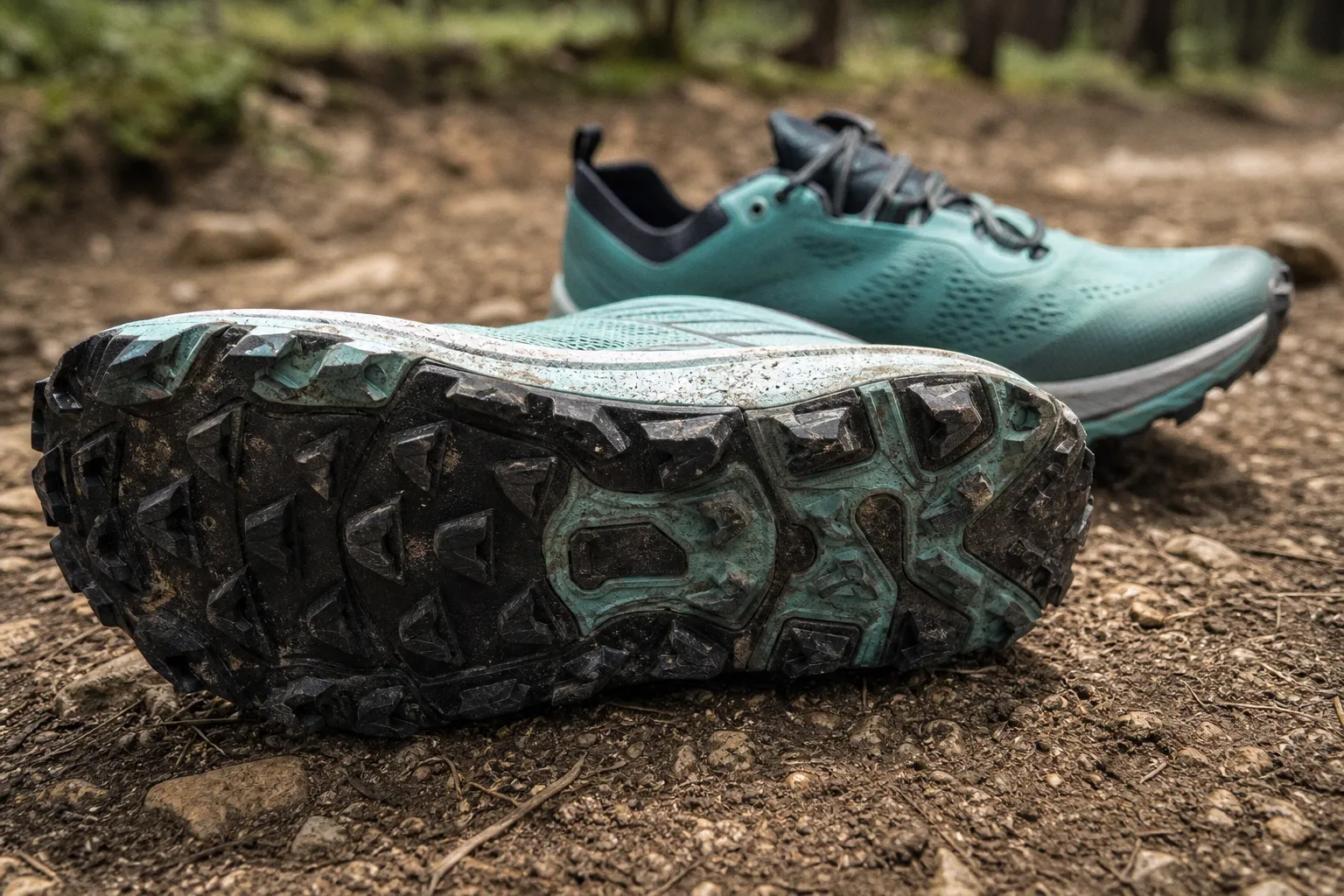
Shoe marketing is grinding hard on anatomy right now. Trend Hunter has flagged “anatomically influenced running shoes,” while deal and gear coverage around Hoka, Skechers, and 2026 men’s running shoe lists keeps circling the same battlefield: comfort, cushion, fit, and whether a shoe actually works once your legs are tired. For trail runners, that matters because a bad upper, sloppy traction, or the wrong bulk does not stay theoretical for long. It shows up in your cadence, your feet, and your willingness to keep moving.
Anatomy is not a magic word
“Anatomically influenced” sounds clean on a product page. It also sounds like the kind of phrase that can hide a lot of fluff.
The useful question is simpler: does the shoe let your foot work without turning every mile into a fight? That means fit first. Load distribution second. Then traction, upper feel, and whether the foam under you helps or just gets in the way.
The current cluster of running-shoe coverage is not giving us one clean winner. Trend Hunter is pointing at the broader design direction. Tom’s Guide is framing the market through its best men’s running shoes in 2026. Yahoo is highlighting the Hoka Clifton 10 deal at REI. AOL is pointing at the Skechers Razor 5 as a low-priced cushioned option with thick foam soles.
That is not a lab test. It is a signal. Brands and retailers are still selling the same promise: more comfort, more cushion, more miles. Your job is to cut through it.
The Hoka Clifton 10 note is about comfort, not trail proof
Yahoo reports that REI is selling the Hoka Clifton 10 for $30 off in 15 colors, with both men’s and women’s versions discounted. The piece calls the Clifton one of Hoka’s most popular picks and describes it as “cloud-like,” citing a Yahoo editor who said it was the only shoe that did not exacerbate her plantar fasciitis while walking for hours at Disneyland.
Useful? Yes. Final verdict for trail running? No.
The confirmed details are worth parsing. Yahoo says the Clifton 10 has a breathable knit upper, a rubber sole with solid traction, and that it runs a little narrow and bulky while still being lightweight enough for all-day wear.
That is the kind of tradeoff you need to respect. Narrow can be a problem if your foot swells on longer efforts. Bulky can feel fine on pavement and annoying when you are trying to place your foot cleanly on broken ground. Lightweight enough for all-day wear is good, but it does not automatically mean sharp, technical trail handling.
If you are shopping off this news, do not get hypnotized by the discount or the color count. Try the shoe with the socks you actually run in. Walk hard. Jog if the shop allows it. Check whether the upper torques across the midfoot. Check whether your toes feel boxed in before you are even warm. If it feels wrong standing still, it usually gets louder once fatigue starts chewing through your form.
Thick foam needs a purpose
AOL’s headline around the Skechers Razor 5 is blunt: $37 running shoes, cushion runners need, thick foam soles. That is all we have confirmed, so do not build a fantasy around it.
Thick foam can be appealing when your legs are beat up. It can also change how the shoe feels under load. The point is not to worship stack height or reject it. The point is to ask what job the shoe is doing in your rotation.
Easy miles? Long walks? Recovery days? A cushioned shoe may earn its spot. Faster trail work, uneven terrain, or descents that demand precise foot placement? Then you need to be more demanding. Cushion should not make you lazy through the kinetic chain. It should not encourage sloppy braking, heavy heel smashing, or a dead cadence.
This is also where training matters more than the sales page. If your feet, calves, hips, and trunk cannot hold position under fatigue, no “anatomically influenced” shoe will save the session. Build the engine and the chassis. If you need simple off-trail conditioning to support that, a consistent dose of home fitness and HIIT work beats pretending the next shoe drop will fix weak mechanics.
The smart move right now is boring. Read the shoe claims. Strip them down. Fit, cushion, traction, upper, weight, terrain. Then test against your actual use, not someone else’s road trip, mall walk, or ranking list. The wilderness does not care what the shoe was called. Your feet will tell you fast enough.