ASICS Wants Its Bouncy Road Shoes To Meet The Trail
A bouncy road shoe is only useful on trail if it stops behaving like a trampoline on marbles.
Clay Masterson, Backcountry Conditioning Expert & Gear Pragmatist·updated July 05, 2026
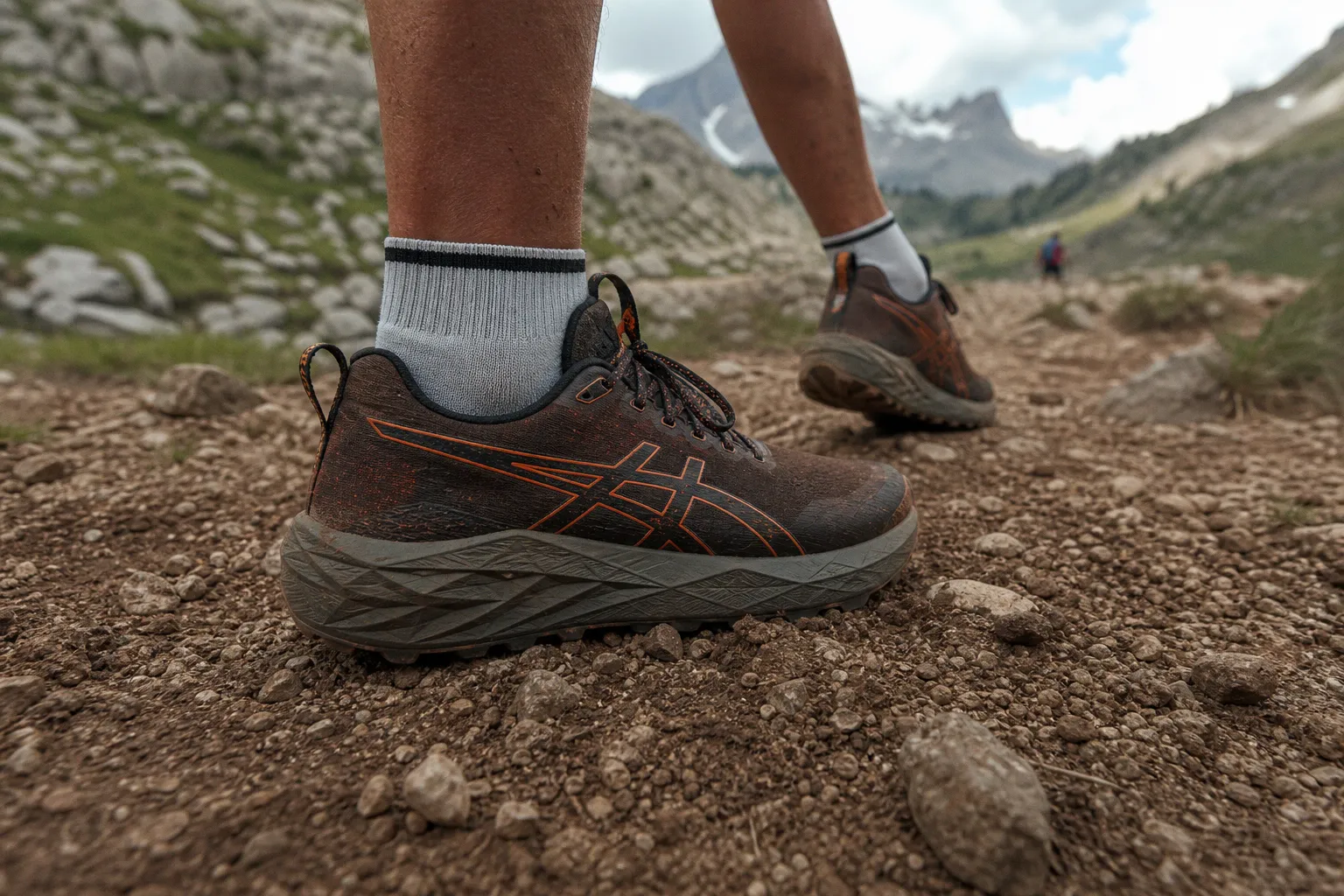
The road-shoe recipe is obvious: soft foam, big rocker, less grind
The Glideride Max is described as using FlyteFoam Blast Max and FlyteFoam Blast Plus, with a pillowy ride and a rocker sole meant to roll you from landing to toe-off. That is the road formula in plain English: reduce ankle work, smooth the transition, keep cadence moving when fatigue starts chewing at form.
For long road runs, that can make sense. Yahoo frames the shoe as a good option for longer runs, walking, travel, and long days on your feet. The wide sole is also called out as giving a stable feel despite the thick midsole.
That last part matters. Stack height and softness are not free. When you raise the foot and soften the platform, you give the ankle more room to wobble unless the base, upper, and outsole control the motion. On asphalt, that’s manageable. On trail, the ground starts torquing back.
So if ASICS is pushing that bouncy road sensation toward dirt, the real test is not whether the shoe feels fun in the first mile. It’s whether the kinetic chain stays organized when the surface tilts, breaks, and rolls under you.
Trail runners should watch the braking, not the bounce
Here’s where runners get lazy: they feel cushion and assume protection. Wrong target.
On trail, especially downhill, your braking mechanics shred you faster than a lack of foam. A soft, rockered platform can help maintain rhythm on buffed-out singletrack or dry fire road. But if the shoe encourages overstriding, heel slapping, or sloppy foot placement, the foam just hides bad inputs until your knees and ankles collect the bill.
A road-style rocker also changes timing. It wants you moving forward. That’s great when the line is clean. It can get sketchy when you need to pause, edge, side-step, or plant hard on loose terrain. Trail running is not just forward propulsion. It’s micro-corrections. Constant ones.
So don’t ask, “Is it bouncy?” Ask better questions:
Can I keep cadence tight when the trail gets choppy?
Does the platform let my foot find the ground, or does it mute too much feedback?
Can I descend without fighting the shoe?
Does the rocker help me roll, or shove me into the next step before I’ve earned it?
That’s the difference between useful cushioning and marketing foam stacked under your ego.
The deal noise is separate from the dirt question
Yahoo reports the ASICS Glideride Max has been listed at $80, down from a normal price of $170, and describes that as a 53% discount. It also says the Glideride Max 2 has been released at $170, while the original uses the same midsole materials. Fine. If you need a plush road trainer or walking shoe, that discount is real enough to pay attention to.
But don’t confuse a road deal with a trail answer.
The Glideride Max, as described in the source, is a soft, rockered road shoe. The Marathon Handbook headline suggests ASICS wants that kind of bounce to cross into trail. Until the actual trail execution is clear — outsole bite, upper hold, platform width, lateral security, and how the rocker behaves off-camber — the smart move is restraint.
Use plush road shoes for recovery miles, long easy aerobic work, and controlled surfaces where the rocker can do its job. If ASICS brings that ride to trail, test it first on tame dirt, not a technical descent with tired legs and a pack bouncing off your spine.
Cushion can save wear. It can also hide slop. The trail always finds slop.