Clay Masterson, Backcountry Conditioning Expert & Gear Pragmatist
July 09, 2026 · 14 min read
Thru-hiking and the myth of finding yourself on trail
Only about 20% to 25% of Appalachian Trail thru-hike attempts make it end to end.
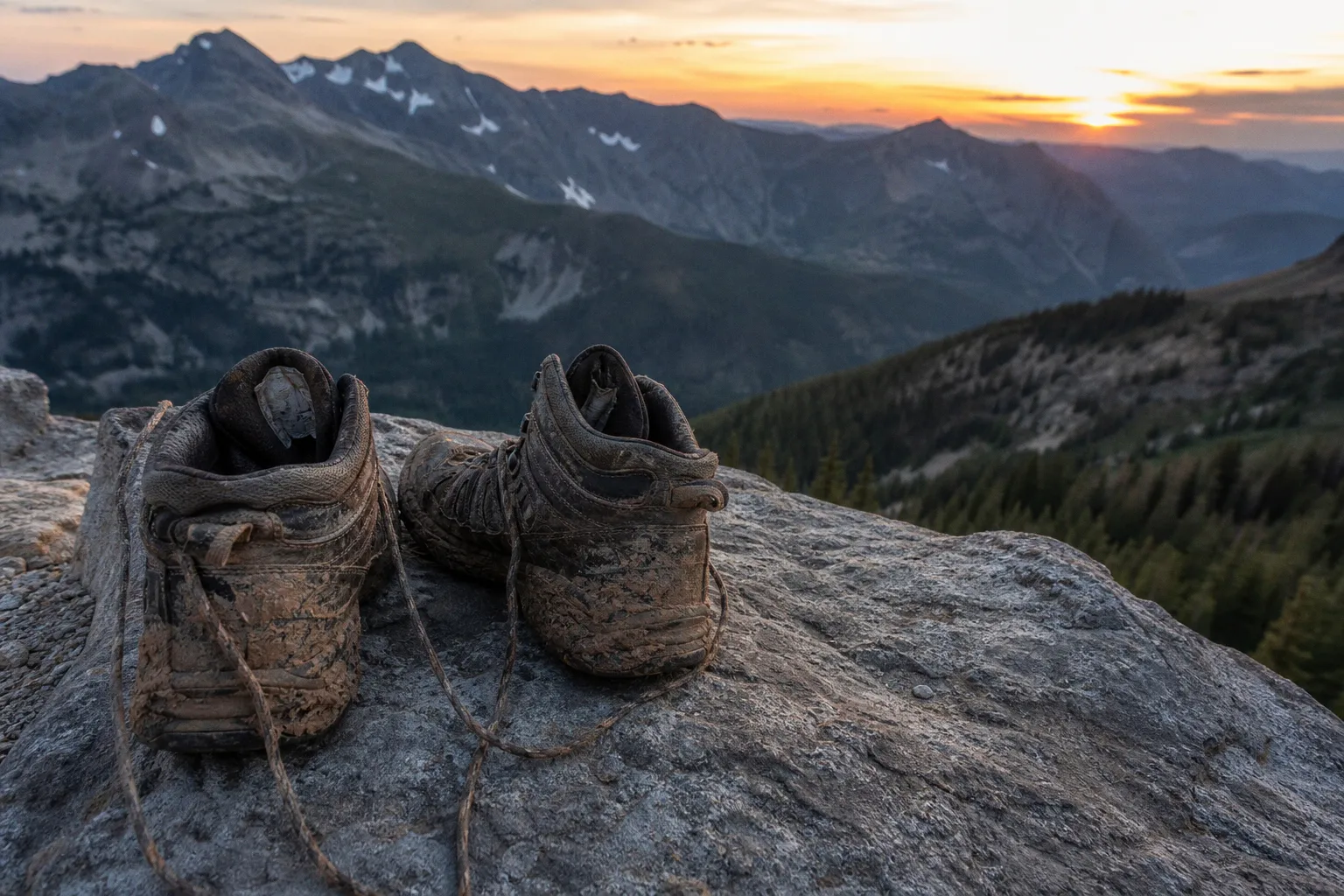
Thru hiking is not a personality transplant. It is a months-long load-bearing problem. The Appalachian Trail runs roughly 2,190 miles. The Pacific Crest Trail stretches about 2,650. The Continental Divide Trail pushes near 3,000. You do not float through those miles on intention. You haul your body, your pack, your bad habits, your weak ankles, your sloppy fueling plan, and your unresolved life mess over rock, mud, heat, snow, and boredom.
If you “find yourself” out there, fine. Good. But the trail does not owe you that. The trail gives you repetition. Friction. Weather. Hunger. Soreness. Logistics. Then it watches what you do under load.
The romantic story gets the order wrong
The clean version goes like this: you quit the job, lace up, step onto a national scenic trail, suffer beautifully, shed your old skin, and return as a tuned-up human with clean priorities.
That story sells books, packs, ultralight quilts, and YouTube channels.
It is not completely false. Long miles can strip away noise. A five-month walk gives your brain fewer places to hide. But people confuse an altered environment with an altered self. Those are not the same thing.
The National Trails System Act passed in 1968 helped formalize the backbone of America’s long trails. These routes became public infrastructure, not therapy offices with switchbacks. They were built, protected, rerouted, maintained, and fought for by people who understood land, access, conservation, and foot travel. That matters. A thru-hike is participation in a trail system. It is not a private vision quest staged for your personal breakthrough.
Most failed expectations begin before the first mile. The hiker believes the trail will solve what daily life has not. Bad relationship. Burnout. Grief. Stagnation. Identity drift. The pack becomes a portable escape hatch.
Then the real trail shows up.
Your shoes shred your heels. Your hip belt rubs raw skin into hamburger. Your appetite outruns your resupply box. Your knees start barking on descents because you have been braking with locked joints for three straight weeks. Your phone dies when you need a shuttle number. Your rain gear wets out. Your hiking partner gets faster than you. Or slower. Or more annoying. Your body stops caring about your narrative.
The trail does not fix weak systems. It exposes them under mileage.
I like that part. Exposure is useful. But call it what it is. Thru hiking is a pressure test. Not a cure.
The logistical grind is the actual trail
The beginner thinks the hard part is walking.
Walking is the visible layer. Under it sits the machine: food, water, sleep, foot care, weather calls, navigation, permits, town stops, repair, money, and time. Miss one gear tooth and the whole thing starts grinding.
A full thru-hike commonly takes five to seven months. That is not a long vacation. That is a temporary life with a harsh operating system. Your day is built around questions that sound small until they are not:
- How many miles to reliable water, and how much weight do I carry to get there?
- Can my feet survive another wet day without blistering deep enough to change my gait?
- Is this pain tendon irritation, muscle fatigue, or the first warning shot of a stress fracture?
- Can I make the next town before the post office closes?
- Do I have enough calories to keep moving without turning stupid by noon?
- Is the pass safe today, or am I letting schedule pressure make the decision?
That last one bites people. The schedule becomes a leash. You have flights, seasons, snow windows, permit dates, a job waiting, a lease ending, money bleeding out. So you push.
Some pushing is required. No long trail is finished by people who negotiate with every ache. But there is a difference between toughness and mechanical stupidity. Toughness is climbing out of camp in cold rain because you planned the day and your body is functional. Stupidity is ignoring shin pain until your stride collapses and your hike becomes a medical extraction with a trail name.
Here is the simple split I use when coaching athletes toward long-distance trail goals:
| Trail problem | Romantic expectation | Working reality |
|---|---|---|
| Daily mileage | “I’ll build up naturally.” | You need progressive load before the trail or the trail becomes your injury program. |
| Food | “I’ll eat when hungry.” | Hiker hunger arrives after sustained deficit; by then poor fueling has already taxed recovery. |
| Pain | “Pain is part of the journey.” | Some pain is adaptation. Some is tissue damage. Learn the difference fast. |
| Solitude | “Time alone will clear my head.” | Time alone can also amplify anxiety, rumination, and bad decision loops. |
| Town stops | “Rest days will reset me.” | Towns can drain money, disrupt rhythm, and turn one zero into three. |
| Gear | “Ultralight fixes everything.” | Low weight helps only if the system still protects sleep, feet, warmth, and movement. |
That is the thru hiking reality vs expectations gap. Not glamorous. Very real.
Your body pays first
A thru-hike is an endurance event with bad recovery conditions. Say that out loud before building a gear list.
You are not training in a lab. You are walking for months while sleeping on the ground, eating shelf-stable food, climbing and descending with load, and trying to manage inflammation with creek water, motel laundry, and whatever protein you can find near a gas station.
Common injuries are not mysterious. Tendonitis. Stress fractures. Severe blisters. Knee pain from braking mechanics. Hip irritation from poor load distribution. Achilles flare-ups from sudden grade changes and stiff calves. Plantar fascia issues from long mileage on beaten feet. The names vary. The pattern does not.
The kinetic chain gets taxed from the ground up. Foot strike changes when blisters appear. That changes ankle mechanics. Ankles change knee tracking. Knees change hip loading. Hips change back tension. Now a “small” hot spot has rewritten your stride for 40 miles.
Most hikers talk gear before mechanics. Wrong order.
You need legs that can descend without turning every step into a panic brake. You need calves and feet that can tolerate volume. You need hips that stabilize under fatigue. You need shoulders and trunk strength to carry load without collapsing into your straps. You need cadence control, especially downhill, where people wreck themselves by overstriding and jamming force through locked knees.
A solid pre-trail build does not have to look fancy. It has to be specific:
1. Loaded walking, not just gym strength. Squats help. Deadlifts help. But your tissues need time under pack load. Start light. Add weight. Add uneven ground. Keep the ego out of it.
2. Downhill conditioning. Uphill gets the glory. Downhill does the quiet damage. Train eccentric control with step-downs, controlled descents, and real trail miles.
3. Foot durability. Rotate shoes in training. Learn your blister triggers. Test socks when wet. Tape before damage, not after your heel looks like raw steak.
4. Back-to-back days. One big Saturday hike proves little. Long trails punish cumulative fatigue. Stack days. Watch what breaks on day two and day three.
5. Mobility where it matters. Ankles, calves, hips, thoracic spine. Not circus stretching. Usable range that keeps your stride clean under load.
6. Recovery habits before you need them. Eating, sleeping, drying feet, managing inflammation, backing off before tissue failure. Build the routine early.
You do not need to be an elite athlete to thru-hike. Plenty of ordinary bodies finish. But ordinary does not mean unprepared. The trail is not impressed by optimism.
Hiker hunger is not a cute personality trait
People joke about hiker hunger like it is a badge. It is really a blunt physiological message: you are running a deficit large enough that your body is now screaming through appetite.
Many long-distance hikers end up needing roughly 4,000 to 6,000 calories per day. That number sounds fun from a couch. It is less fun when you are trying to carry enough food without turning your pack into a sack of bricks, while also getting enough protein, fat, sodium, and micronutrients to keep the engine from coughing.
The trap is starting underfed. Early in a hike, appetite may lag behind output. You are excited. Your schedule is aggressive. You snack randomly and tell yourself dinner will cover it. It will not.
Underfueling has consequences:
- Your pace drops but perceived effort climbs.
- You get colder at night because energy availability is low.
- Recovery gets sloppy and tendon irritation lingers.
- Decision-making gets brittle.
- Mood tanks, then you call it “mental challenge” when it is partly calories.
- You binge in town, feel wrecked, then hike out under-recovered again.
That loop chews people up.
I am not precious about trail food. I have eaten ugly meals out there and will again. But your fueling plan has to match output. Energy density matters. Sodium matters. Protein matters. Food you can actually swallow at mile 24 matters more than the clean label on the package.
A hiker who cannot fuel consistently is not being minimalist. They are borrowing against tomorrow’s legs.
You cannot mindset your way out of a chronic calorie deficit.
The mental side and the physical side are welded together. Separate them on paper if you want. The body will not.
The 25% threshold tells you what motivation cannot do
The Appalachian Trail completion rate hovering around 20% to 25% is not just a trivia point. It is a warning label.
Most people who step onto the AT with thru-hike intentions are motivated. They have told friends. Bought gear. Made arrangements. Built an identity around the attempt. Motivation is already present at the start line.
And still, most do not finish.
That should kill the lazy advice that says you “just have to want it enough.” Wanting is cheap at mile one. It gets expensive after weeks of rain, foot pain, social friction, and the same mashed food bag every night.
So what separates finishers? Not one magic trait. Usually a stack of boring competencies.
They adjust. They do not marry a mileage plan after conditions change. They treat feet early. They eat before the bonk. They carry enough insulation when the forecast gets mean. They replace shoes before the midsole dies. They can be alone without spiraling. They can hike with others without outsourcing decisions. They know when to push and when to stop.
That last skill is underrated. Some hikers quit because they are soft. Others quit because they spent three weeks pretending injury was character development.
There is also financial pressure. Thru hiking is not accessible just because walking is free. Months away from work cost money. Gear costs money. Food costs money. Travel, shuttles, hostels, replacement shoes, laundry, medical care, and emergency exits cost money. A thin budget makes every decision tighter. That stress rides in the pack too.
The industry likes to flatten this. “Anyone can do it.” Nice slogan. Incomplete sentence.
Anyone can start. Finishing asks for time, money, health, support, skill, and a tolerance for discomfort that does not always photograph well.
Mental prep means more than inspirational grit
Thru hiking mental prep is usually treated like a motivational poster with trekking poles. That is useless.
Mental prep means knowing your failure patterns before the trail magnifies them. Do you make bad decisions when tired? Do you ignore pain to protect pride? Do you panic when plans change? Do you get reckless around faster hikers? Do you spend money impulsively in town? Do you confuse loneliness with proof that you made a mistake?
You bring those patterns with you. The trail does not erase them. It loads them.
A useful mental prep process is less dramatic and more direct:
1. Define why you are hiking without making the trail responsible for saving you. Want adventure. Want a test. Want distance. Want a reset. Fine. But do not demand that a footpath fix your marriage, career, grief, or depression.
2. Practice discomfort on purpose. Train in rain. Hike when tired. Eat trail food during long sessions. Do boring miles. You need rehearsal, not fantasy.
3. Build decision rules before stress hits. For example: no major mileage push when sharp pain changes gait; no exposed pass attempt when weather crosses your safety line; no skipping water because you dislike the carry.
4. Expect emotional flat spots. Not every day will feel meaningful. Many will feel like labor. That does not mean the hike is failing.
5. Keep contact with reality off trail. Bills, relationships, future work, and medical needs still exist. Avoiding them for months does not make them vanish.
I have no patience for turning every hard emotion into a grand revelation. Sometimes you are sad because you are exhausted. Sometimes you are angry because you underate. Sometimes you feel empty because the thing you hyped for two years is now repetitive work.
That does not cheapen the experience. It makes it honest.
Post-trail depression is not weakness
The finish can hit harder than expected.
For months, your life has a clean structure: wake, pack, walk, eat, manage problems, sleep. Your goals are immediate. Your body works all day. Your social world is narrow. Your identity is simple. You are a hiker.
Then it ends.
The return can feel like someone cut the power. Normal life is louder and softer at the same time. Emails. Traffic. Indoor air. Small talk. Job applications. Family questions. A body that wants movement but also needs repair. A brain still calibrated to mileage. This is where post trail depression after a thru hike can creep in.
Do not dress it up. It is real for some hikers. It can look like restlessness, low mood, irritability, loss of purpose, trouble sleeping, or contempt for routines that used to feel normal. It can also be intensified if you expected the trail to deliver permanent clarity and came home to the same unresolved problems.
The fix is not to sneer at civilization and start planning the next escape before your shoes dry.
You need reintegration with some backbone:
- Keep a movement routine, but reduce load. Your joints and connective tissue need recovery even if your brain wants another 25-mile day.
- Schedule decisions you postponed. Work, housing, relationships, money. Put them on paper. Ambiguity breeds drag.
- Stay connected to trail people, but do not use trail identity as a bunker.
- Eat like someone repairing a body, not someone still trying to win the buffet after a mountain pass.
- Get help if the low mood sticks or gets dangerous. A thru-hike is not mental health treatment, and finishing one does not make you immune to needing support.
This is where the myth does damage. If the story says the trail reveals your true self and solves the deep ache, then struggling after the finish feels like failure. It is not. It is transition. A hard one.
So, is thru hiking worth it?
Yes, if you understand the bargain.
Thru hiking can be one of the cleanest tests you ever take. It can sharpen your tolerance for discomfort. It can teach you how your body behaves under load and hunger. It can expose what you avoid. It can give you deep competence in weather, terrain, pacing, and self-management. It can build friendships that skip the usual social varnish because everyone involved smells bad and has seen each other limp.
That is worth a lot.
But it is not worth lying about.
Do not go because you think the trail will hand you a new self at the terminus. Go because you are willing to do the work. Go because you respect the route enough to prepare. Go because you can handle a goal that may not care about your feelings on a given Tuesday. Go because the act itself matters even when it is dull, wet, hot, lonely, or mechanically brutal.
The Triple Crown trails — the AT, PCT, and CDT — are not symbols first. They are miles. Rock. Grade. Exposure. Heat. Snow. Bureaucracy. Community. Maintenance. Human effort laid across huge terrain.
If that still pulls at you, good. Start training. Fix your footwear system. Build your aerobic base. Learn to descend. Save more money than the fantasy budget says. Practice eating enough. Practice quitting the right things — ego, impatience, sloppy planning — before they quit the hike for you.
The trail may change you. It may not. It will definitely reveal how you move when the story gets stripped away and only the next mile remains.
That is not a lesser promise.
It is the honest one.