Clay Masterson, Backcountry Conditioning Expert & Gear Pragmatist
July 06, 2026 · 10 min read
A Dead Phone Taught Me to Print Backcountry Camping Permits
A dead battery doesn't ring first. It just goes black.
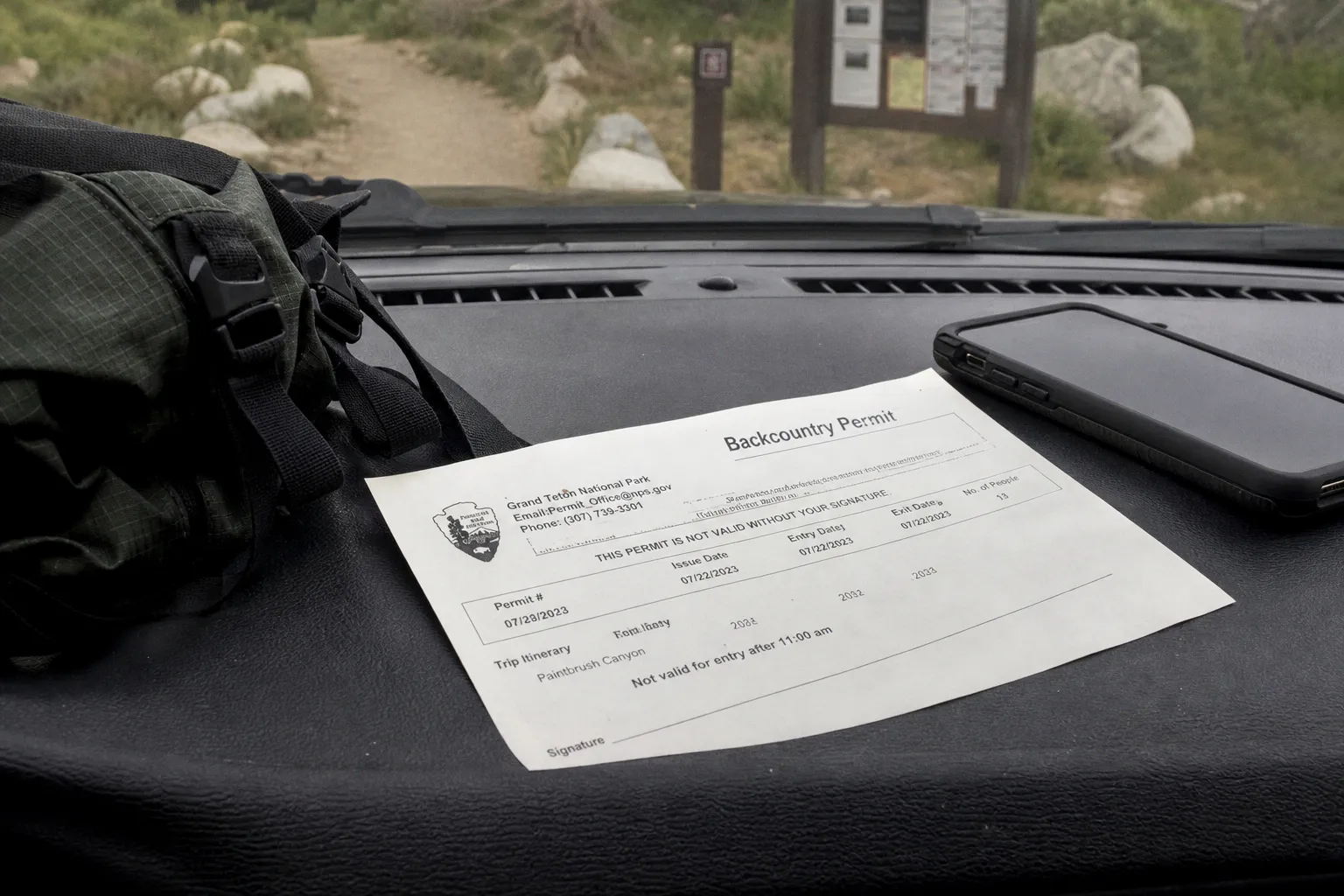
A Dead Phone Taught Me to Print Backcountry Camping Permits
The number of backcountry camping permits honored from a phone screen in deep wilderness is statistically zero. Rangers can't pull up a QR code if there's no signal. They can't verify your confirmation email if your lithium is cold-soaked below 10%. And they don't have to. Federal land managers — the National Park Service, U.S. Forest Service, and most state agencies with backcountry zones — built their verification protocols around paper because paper is the only medium that doesn't need a charger.
A printed permit is not a relic. It's the only language a ranger in the backcountry is required to speak back to you.
I'll get to my dead-phone story in a minute. But first, the math.
For related context, see Fitness experts promote structured 'train smart' approach.
The Digital Mirage: Why Your Phone Isn't a Reliable Ranger Station
A digital permit lives on a screen, which lives on a battery, which lives on a charge you hope holds up. That chain breaks constantly in the backcountry. Three failure points, every one of them guaranteed if you stay out long enough.
Cold kills lithium. Below freezing, lithium-ion capacity collapses. A fully charged phone can drop below 20% in a single hour once the temperature dips into the 20s°F. By the time you wake up for a 4 a.m. alpine start, the screen is already dying. Permits don't matter when the device is dead.
Signal is a fiction on a topo map. "No service" zones aren't exceptions in meaningful wilderness — they are the default. The drainages, ridgelines, and high-elevation basins that need permits most are exactly the places your phone stops working. Federal agencies know this. They built their verification protocols around it.
Water doesn't negotiate. A dunked phone, a sweaty chest pocket, a four-hour rain squall. Water finds electronics the way gravity finds a rolled ankle on a scree slope. One splash and your confirmation file is unreadable.
I'll add a fourth. Cracked screens at the trailhead. I've watched three different hikers fish their phones out of their packs to show a permit, only to see the spider-web glass make the text impossible to read. Paper doesn't shatter.
Your phone is a tool, not a permit. Treating it as one is how trips die on day one.
The Regulatory Reality of Wilderness Quotas and Verification
Backcountry camping is not a free-for-all. It is a managed resource, and the managers are serious.
Federal agencies require printed permits for backcountry camping, displayed on your dashboard or carried on your person. Not "available upon request." Carried. Visible. Real. That isn't a stylistic preference. It's the operating standard for rangers who can't afford to trust an unverifiable device.
The reason comes down to quotas. Fragile ecosystems — high-alpine basins, desert springs, river corridors with rare flora — operate under daily or seasonal caps. They limit human footprints per drainage, per night, per ridge. Once you cross into a quota zone, the paper on your pack is proof you're allowed to be there. No paper, no entry. No exceptions for tourists who had full bars back at the trailhead.
Federal land managers don't get to pick their verification tools. The trailhead might be an hour from the nearest cell tower. The ranger on duty might be a seasonal hire working off a clipboard and a radio. The user — you — might have spent the last three days in a lightning storm with the contents of your pack soaked through. Paper is the lowest common denominator. Every party in that chain can hold it, read it under pressure, and copy the relevant field onto a return log without arguing about screen brightness. Anything softer than paper doesn't survive the contact.
A quota system without an enforceable permit is just a polite request.
Some wilderness areas additionally require you to display a copy on your vehicle's dashboard at the trailhead. That copy tells the lot ranger which zone you're entering, when your permit window opens, and how to verify on return that you actually came out. Skip that step and you're flagged as a no-show before you take your first step. No-shows complicate search-and-rescue accounting. Don't be a complication.
Specific fine amounts for failing to carry a physical permit vary wildly by jurisdiction and aren't standardized across federal and state lands. What I can tell you is that rangers do write the citations, and they stick.
Leave No Trace: Why Paperwork Is Part of Your Environmental Duty
The seven Leave No Trace principles start with planning and preparation. Not "arrive and improvise." Plan. Then prepare. The paperwork is part of the prepare.
Most beginners treat Leave No Trace as a feel-good slogan. It isn't. It's operational discipline. Step one — plan and prepare — covers everything from reading the route to packing the ten essentials. It also covers your permits, your route plan, your emergency contacts, and the regulations specific to the zone you're entering.
If you treat the permit like a formality, you're signaling to the land manager that you skipped the basics of step one. Trail crews, biologists, and rangers pour thousands of hours and dollars into keeping damage below the threshold of recovery. Permit revenue funds a chunk of that infrastructure. Skip the permit, and you're freeloading on a system you didn't bother to learn.
Here's the harder truth. Showing up without a printed permit doesn't just inconvenience you. It tags you as the person who skipped the planning step. Rangers remember those people. Not fondly.
The second principle — travel and camp on durable surfaces — also leans on your permit. In a quota zone, your permit tells you which campsites are open and what food storage hardware is required for that specific drainage. Without paper, you're guessing. Guessing in a fragile basin creates braided social trails, illegal fire rings, and trampled vegetation that takes decades to recover.
Paper, in other words, is environmental technology. Treat it that way.
The Anatomy of a Fail-Safe Backcountry Permit Kit
A good permit kit weighs almost nothing and saves your entire trip. Build it before you lace up your boots.
| Component | Purpose | Where it lives |
|---|---|---|
| Printed permit, copy #1 | Legal entry proof on your person | Chest pocket or hip belt pouch |
| Printed permit, copy #2 | Redundancy if copy #1 is soaked or lost | Zip-top bag inside the bear can |
| Printed permit, copy #3 | Dashboard display at the trailhead | Face-up inside the windshield |
| Park map with zone markers | Cross-reference which sites are open | Folded inside a gallon zip-top |
| Trip itinerary | Name, route, return date left with a contact | With someone outside the trip |
| Local regulations sheet | Quota, fire, food storage rules | Folded with the permit |
Six items. Ten minutes of printing. Zero excuses once you're at the trailhead.
I keep one copy laminated for wet conditions — about ten cents more per page, and it survives anything short of a campfire. I keep one dry copy in a zip-top bag inside the bear can, which is the one place moisture won't reach it on a rainy night. The dashboard copy doubles as a note to anyone scouting my rig: yes, somebody is back there, and somebody is coming back out by the date printed on the form.
A few agencies may accept a screenshot on your phone as a last resort. Treat any acceptance of a digital copy as a courtesy, not a guarantee. The screenshot won't display in a dead phone. It won't satisfy a ranger who decides your screen is too cracked to read. The paper is the only thing that doesn't fail.
If you lose every copy mid-trip — bear can ripped open in a river crossing, say — most agencies have a backcountry office at the road's end where you can request a reissue on presentation of your email confirmation and a photo ID. Some don't. Some will turn you around at the check-in if you show up with no paper in hand. Don't count on a fallback you haven't confirmed in advance.
Navigating Agency Requirements Beyond the Screen
The paper mindset doesn't end at the permit. Once you commit to the discipline, it bleeds into every document you carry.
| Document | Why it matters |
|---|---|
| Trail topo map | GPS fails, drains batteries, loses signal. Paper doesn't. |
| Emergency contact card | Search and rescue needs a name and a number. |
| Itinerary with return date | Triggers overdue response when you miss the window. |
| Park regulations summary | Quota, fire, food storage, and wildlife rules specific to that zone. |
| Insurance card | Evacuation and hospital logistics if the worst happens. |
If you've absorbed one piece of paper discipline into your kit, the rest follows. The phone is a luxury item — useful, even critical in many cases. The paper is the spine. Without the spine, the luxury collapses the moment conditions get ugly.
Don't assume dispersed camping on public lands behaves the same way. Most dispersed sites — primitive camping outside developed zones — don't require permits at all. The moment you cross into a designated wilderness, a national park backcountry, or a state-managed zone with quotas, the rules shift. Verify the land manager. Verify the zone. Verify what format they require. Then print twice.
Before you print, hit the agency's official website and confirm three things:
1. The exact zone of your trip is in their permit system, not just listed as an open area.
2. The permit format they expect is a physical printout — not just a confirmation number emailed back.
3. The quota window for your dates is still open and has capacity.
If any of those three answers is "I'm not sure," you're not ready to drive to the trailhead. The cost of paper is roughly three cents per page. The cost of a turned-around trip is every mile you drove to get there.
The agencies diverge more than you'd expect once you're past the basics. The National Park Service backcountry offices run on a reservation window — Yosemite, Grand Canyon, and Glacier all use either a lottery or a first-come window months in advance, with a small slice held for walk-ins at the visitor center. U.S. Forest Service districts vary district by district; some take reservations online, some only by phone or in person. State parks run their own rules, often with seasonal quotas that flip on or off based on fire danger and water levels. The format of the printout changes. The rule that you must have it on your body does not.
My Dead-Phone Mileage
I promised the dead-phone story. Here it is.
Three winters ago, I pulled into a remote Southwest trailhead with my email confirmation on my phone, a topo map loaded into Gaia, and a battery showing 41%. The overnight low was forecast at 18°F. I told myself I'd print at the gas station in the last town — the one with the pump-and-print combo I always use.
I didn't print at the gas station. I told myself I had time.
Forty miles in, the battery died. The screen went black at the second creek crossing. By the time I reached the ranger check-in, the ambient temperature was sitting at 22°F. Any lithium battery left in a pack overnight would be a brick by morning. The ranger asked for my permit. I pulled out the phone. Black screen. He didn't lecture me. He just pointed back down the trail.
I drove forty miles home that night with nothing to show for it. Burned a tank of gas. Skipped two planned days of work. Spent a year not quite forgiving myself for letting a three-cent piece of paper cost me the trip.
Print the permit. Twice. Lose the excuses. The wilderness doesn't grade on effort.