Women's HOKA Challenger 8 Trail Running Shoe Review
A trail shoe earns its keep when the route quits behaving. CleverHiker’s new review puts the women’s HOKA Challenger 8 near the top of its women’s trail running shoe picks, based on testing across…
Clay Masterson, Backcountry Conditioning Expert & Gear Pragmatist·updated July 10, 2026
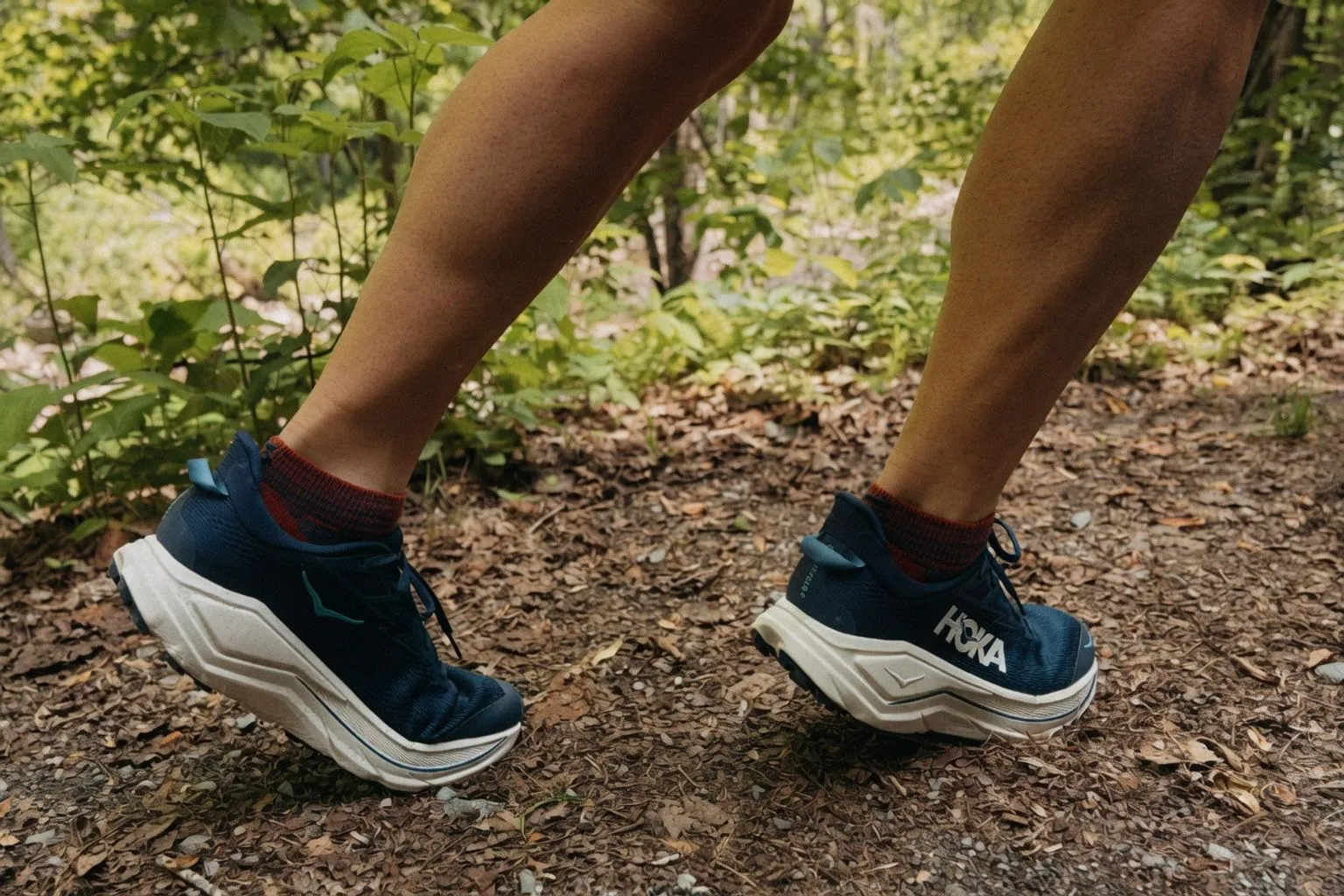
A trail shoe earns its keep when the route quits behaving. CleverHiker’s new review puts the women’s HOKA Challenger 8 near the top of its women’s trail running shoe picks, based on testing across gravel, smooth singletrack, technical trail, mud, roots, wet rock, and urban paths. That matters because most runners do not need a shoe that only works on one perfect surface. They need one that can grind through mixed terrain without turning every descent into a foot-placement negotiation.
The useful part: this is not just another max-cushion praise lap
CleverHiker says the Challenger 8 stood out for comfort and performance, and specifically outperformed HOKA’s Speedgoat 7 in responsiveness, breathability, and comfort during its testing. That is the line I’d pay attention to.
Not because one shoe “beats” another in some abstract gear-board contest. Because responsiveness matters when your cadence starts to fall apart late in a run. A dead shoe makes you stomp. A bouncy shoe helps you keep the kinetic chain moving without muscling every stride from the hip flexors down.
The review describes the Challenger 8 as roomy in the toe box, with a heel and midfoot snug enough to feel secure on technical sections and descents. That is the right balance on paper: toes need space under load, especially on longer efforts, but the rearfoot cannot slop around when the trail tilts, twists, or drops.
There are fit caveats. CleverHiker notes that some runners may find the wide width a bit narrow, the midfoot a little too snug, and the shoe running slightly long. That is not a throwaway detail. If your foot swells hard after an hour, or if you already fight midfoot pressure, do not ignore that. Fit problems do not get noble at mile ten. They get louder.
Where the Challenger 8 seems to bite
The testing described was broad: recovery runs on dirt roads in the rural Midwest, long efforts on gravel and smooth singletrack in southern Virginia, a 100-mile section hike on central Virginia’s Appalachian Trail in rainy conditions, and easy urban trail runs in Philadelphia heat and humidity.
That spread matters. A lot of shoes feel clean on crushed gravel and then fold when roots, mud, and wet timber start torquing the foot sideways. According to CleverHiker, the Challenger 8’s traction was “extraordinarily grippy,” with deep lugs digging into mud, gravel, and compact dirt. The review also cites a 4mm Durabrasion rubber outsole that held on wet rocks and logs during the rainy Appalachian Trail section hike.
The more interesting note is not just grip. It is range.
CleverHiker says the shoe transitions well from compact surfaces to more technical terrain and does not feel like overkill on smoother routes. That is the sweet spot for many trail runners who train from the front door: pavement connector, gravel path, packed dirt, then a rocky ribbon of singletrack that starts asking real questions.
If that is your usual loop, a highly specialized shoe can become dead weight. Too much lug on easy trail feels clumsy. Too little bite on technical ground turns descents into braking drills. The Challenger 8, at least in this test, appears to sit in the middle lane: enough outsole to hold, enough ride to keep moving.
The tradeoff: cushion can still get squirrelly
CleverHiker praises the cushioning as generous and comfortable, but also reports feeling slightly unstable on steeply cambered terrain. That is the warning label.
A cushioned platform can protect the legs on long runs, especially when fatigue starts shredding mechanics. But stack and softness change how cleanly you sense the ground. On off-camber trail, your ankle, knee, and hip have to manage load distribution fast. If the shoe feels unstable there, you need to know before you commit it to a race, a mountain day, or a wet technical route.
The mesh upper gets strong marks for breathability, including in Mid-Atlantic summer heat and humid urban running. That is practical. Hot feet swell. Swollen feet change fit. Changed fit creates friction. Friction becomes the thing you think about instead of cadence, fueling, or not eating dirt on a descent.
The current trail-running market is also busy around this lane. Other recent items in the same news cluster point to Kizik pushing hands-free footwear into performance trail running, TUDOR tying into the UTMB World Series, and HOKA deals around its cushioned Skyflow road shoe. Fine. Noise is noise. For actual training, the question stays simple: does the shoe support the work you do?
Based on CleverHiker’s test, the women’s HOKA Challenger 8 looks like a strong candidate for runners who split time between gravel, dirt roads, urban trails, and technical singletrack, and who want comfort without giving up bite. But I would not buy it blind if you are sensitive through the midfoot, need a truly generous wide fit, or run lots of steep camber. Try it under load. Walk downhill. Cut laterally. Make the shoe prove it before the trail does.