Clay Masterson, Backcountry Conditioning Expert & Gear Pragmatist
July 20, 2026 · 14 min read
Backpacking for beginners: the rise of the overnight micro-trip
A first backpacking trip does not need three days, a resupply plan, or a 60-liter pack stuffed with fear purchases.
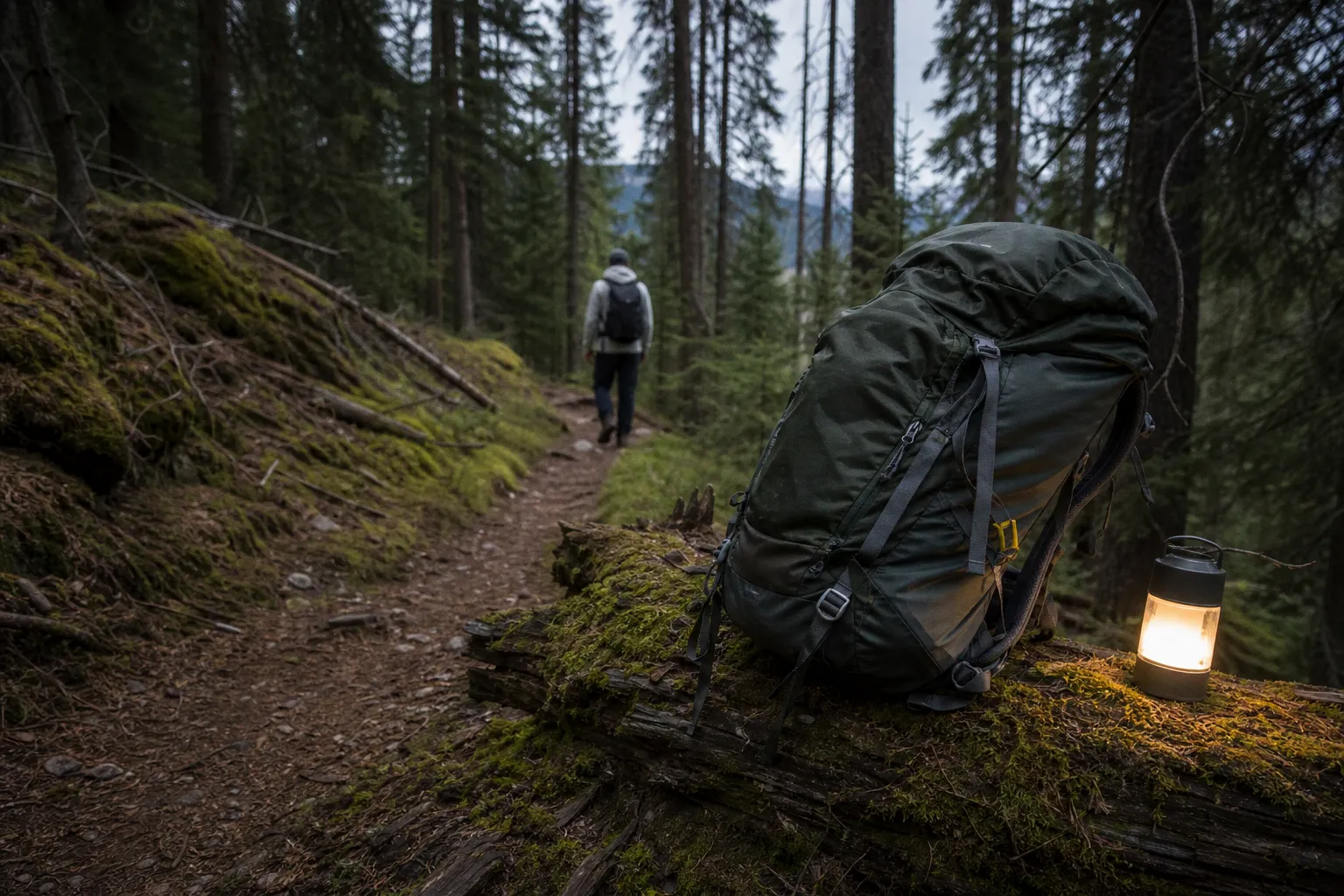
It needs one night, a local trailhead, and enough honest friction to expose what your gear and body are doing wrong.
That is the value of the overnight micro-trip. Call it a microadventure. Call it a Sub-24-Hour Overnight, or S24O—the term Grant Petersen put into writing back in 2007 for a quick camp-out that starts after work and ends the next morning. The label matters less than the format: leave close to home, walk a manageable distance, sleep outside, hike back before your small mistakes turn into expensive ones.
For backpacking beginners, this is the right proving ground. Not because it is easy. Because it is contained. You can learn how your shoulder straps bite, whether your stove actually lights, and how your feet respond to load without committing yourself to a 30-mile route where bad decisions compound.
Hiking drew roughly 63 million Americans in 2024. Backpacking is growing too, rising from 6.6 million participants in 2007 to 10.3 million in 2021. A lot of those people are discovering the same thing: the barrier is not the wilderness. It is the bloated idea that a “real” backpacking trip must be a grand expedition.
It does not. One night counts. In fact, one night teaches faster.
The micro-trip is not a watered-down expedition
Alastair Humphreys popularized “microadventure” as something short, simple, local, and cheap enough to fit around a normal working life. That definition has held up because it attacks the real excuse machine.
“I don’t have four free days.”
“I don’t own ultralight gear.”
“I need to get fitter first.”
“I’ll go once I know more.”
No. You need a Tuesday afternoon, a legal campsite, and the willingness to carry your own dinner for a few miles.
The S24O model strips backpacking down to its working parts. Start after work or early in the evening. Hike to a nearby designated site. Sleep. Pack up in the morning. Return before lunch, or before you start inventing reasons to postpone the next trip.
This format is not merely convenient. It is mechanically useful. A long trip lets you hide bad systems behind stubbornness. You can grind through a badly fitted pack for three days and call it character. On an overnight, you can isolate the failure:
- The sleeping pad leaked because you never checked its valve.
- Your food bag became a sticky brick because you packed loose snacks.
- Your rain shell was buried under your quilt.
- Your headlamp battery was already half dead.
- Your hip belt rode above your iliac crest, shifting load into your traps and lower back.
- Your “lightweight” kit was light only on a product page, not once water, food, and a full fuel canister entered the pack.
That is data. Better than theory. Better than watching another ten gear videos.
A micro-trip is not practice for backpacking. It is backpacking with the blast radius reduced.
The trend is rising because modern life is fragmented, but I would not mistake convenience for softness. A short overnight demands discipline. You still manage darkness, temperature, water, navigation, camp setup, food storage, and your own fatigue. The forest does not lower its standards because you plan to be home by breakfast.
Short trips build skills without letting errors snowball
The biggest mistake I see in overnight backpacking for beginners is treating skills as trivia. People memorize the Ten Essentials, buy the list, and assume the job is done. But wilderness competence is procedural. It lives in the sequence of actions your hands can perform when cold, tired, hungry, and short on daylight.
A micro-trip gives you repetitions.
You learn to arrive at camp with enough daylight to work, not just enough daylight to panic. You learn that a tent pitch on a flat lawn tells you almost nothing about pitching on lumpy ground with roots, wind, and fading light. You learn how much water you actually drink after hauling a pack uphill. You learn whether your dinner is satisfying enough to support the next morning’s climb rather than merely photograph well in a titanium pot.
The skills transfer directly to longer routes, but the consequences remain manageable.
The systems worth rehearsing
On my first outings with newer backpackers, I want to see them work through five systems without coaching:
1. Pack access under pressure. Rain gear, map, headlamp, first-aid kit, water treatment, and insulation cannot live in the bottom of a tightly packed pack. If you need an item in five minutes, it needs a five-second access path.
2. Camp setup before darkness. Shelter selection, stake placement, tensioning, and site cleanup are not glamorous. They are also the difference between sleeping and spending six hours listening to fabric snap against your face.
3. Water management. Know where your reliable source is, how far it sits from camp, and what treatment method you are carrying. “There should be a creek” is not a plan. Seasonal sources vanish. A short route is where you learn to read water reports and carry capacity intelligently.
4. Pacing under load. Your unloaded hiking pace is meaningless once a pack starts torquing your hips and changing your stride. Learn your loaded cadence on local terrain before you use optimistic map timing on a remote route.
5. Morning efficiency. A sloppy morning routine will shred your trail time. Pack the same way each trip. Know what gets packed last, what stays accessible, and what must be checked before you walk away from camp.
The beauty of easy backpacking loops is that they let you test these systems without the logistical circus of a point-to-point trip. Park at one trailhead. Walk a loop or a short out-and-back. Sleep at a permitted site. Return to the same vehicle. No shuttle, no ride coordination, no rescue plan built on a friend’s vague availability.
Choose a route that is boring on paper and useful on foot. A local loop with moderate elevation, a dependable water source, clear regulations, and a bailout option is better than a famous trail that forces you into a hard mileage day.
Your pack is a load-management tool, not a storage bin
The pack is where beginner enthusiasm goes to die. People buy a large bag first, then fill every empty pocket because empty space feels wasteful. By mile four, that “preparedness” is hanging off their shoulders like a penalty.
A common guideline is to keep a loaded backpacking pack at or below 20% of body weight. For a day pack, the commonly cited number is 10%. Treat those as reference points, not sacred thresholds. A strong, trained hiker may handle more. A smaller or less-conditioned hiker may find less is plenty. Terrain, heat, elevation gain, and prior injury all change the equation.
What does not change is physics. Every unnecessary pound increases muscular demand and changes how the kinetic chain absorbs force. Your calves work harder. Your hip stabilizers fight more rotation. Your knees take more braking load on descent. Your foot placement gets lazy as fatigue rises. Then you catch a toe on a root because you were too tired to pick up your feet.
For an overnight, a 35- to 55-liter pack is usually enough. That range has room for shelter, sleep insulation, food, water, layers, and the few safety items that belong on every trip. You do not need an expedition hauler for one night unless you are carrying specialized seasonal gear or equipment for a child.
Backpacking labels can help, but they can also become a distraction:
| Category | Base weight definition | What it means for a beginner |
|---|---|---|
| Traditional | Above 20 lb / 9 kg | Can work, but packing discipline becomes critical fast |
| Lightweight | Under 20 lb / 9 kg | A realistic target for most overnight hikers |
| Ultralight | Under 10 lb / 4.5 kg | Efficient, but not a requirement and not automatically safer |
Base weight excludes consumables: food, water, and fuel. Do not use it to flatter yourself. The load on your back includes everything. A 12-pound base kit plus two liters of water, dinner, breakfast, snacks, and fuel is no longer a 12-pound carry.
I care less about whether your spreadsheet says “ultralight” than whether your pack carries cleanly. The hip belt should transfer the bulk of the load to the pelvis. Shoulder straps stabilize; they should not suspend the whole operation. If your shoulders are burning within the first mile, stop. Adjust. Do not push through bad fit just because other hikers are moving past you.
If the load rides wrong at mile one, it will own you by mile six.
Pack it in layers, not in chaos
My basic overnight packing order is brutally simple:
- Bottom: sleeping bag or quilt, spare dry sleep clothes, and other items needed only at camp.
- Core against the back panel: dense weight—food bag, cook kit, or water bladder—kept close to your spine so the load does not pull you backward.
- Outer core: shelter body and rain protection, depending on weather and access needs.
- Top or lid pocket: insulation layer, headlamp, map, first aid, toiletries, and snacks.
- Exterior pockets: water treatment, frequently used snacks, rain shell if conditions are unstable. Nothing critical should be able to fall out or snag brush.
This is not religion. It is load distribution. Keep dense mass close and high enough to avoid sagging, but do not stack hard objects where they jab your lumbar spine. Walk ten minutes from the trailhead. Then stop and re-tension the shoulder straps, load lifters, sternum strap, and hip belt. Packs settle. Bodies warm up. Make the adjustment before the hot spots start grinding.
A beginner backpacking gear list should earn its place
Outdoor brands make money when you confuse novelty with necessity. A micro-trip is the antidote because it forces each item to justify its weight, volume, and function by morning.
For one mild-weather overnight, your beginner backpacking gear list does not need to be exotic. It needs to work.
You need a shelter appropriate to the forecast and regulations. A tent is straightforward, but a tarp or bivy can work if you already understand site selection and condensation. You need insulation underneath and above you: a sleeping pad and sleeping bag or quilt matched to the actual low temperature, not the pleasant afternoon forecast. You need a reliable water treatment method, a way to carry water, food you can eat without a complicated kitchen, navigation backup, light, and a basic first-aid setup.
Then there is the gear that experienced people dismiss until it matters:
- A dry insulating layer reserved for camp. Not the sweaty fleece you climbed in.
- A rain shell that is actually reachable.
- A headlamp, not a phone flashlight that drains the device you need for maps and emergency contact.
- A repair strip, patch, or tape for the predictable failures: pad punctures, torn mesh, loose straps.
- A small trash bag. Every wrapper, food scrap, and broken zip tie leaves with you.
- A sit pad if cold ground will make you rush dinner and crawl into your shelter before you have handled camp chores.
Do not buy a full ultralight kit because the internet made you feel behind. Lightweight backpacking is useful because it reduces strain, not because it earns style points. A basic, slightly heavier tent that keeps you dry is better than a fragile specialty shelter you do not know how to pitch. A familiar stove is better than an elaborate cooking system you have never lit in wind.
The correct first kit is usually the one you can operate without looking at the instructions.
That said, do not drag worn-out car-camping gear onto a trail just to prove you are tough. A massive canvas sleeping bag, a folding chair, a full frying pan, and four changes of clothes are not “beginner friendly.” They are dead weight. Toughness is carrying what the job requires and leaving the rest in the trunk.
Plan the first loop like a field test
The first time backpacking tips that matter are mostly boring before the trip. That is why people skip them. They want to talk about views and meals. Fine. But route reconnaissance keeps a fun night from turning into a cold, late arrival with no legal place to sleep.
Start close. Ideally, choose a trail you have day-hiked before. If not, choose one with simple navigation, documented camping rules, dependable trail conditions, and a clear turnaround or exit option. Know whether dispersed camping is allowed. Know if you need a permit or reservation. Know the food-storage rules. “I thought it was okay” does not help the site, the wildlife, or the ranger who has to clean up after you.
For a first overnighter, I prefer a route with modest distance and enough elevation to make the pack honest. Flat ground can be useful, but it hides how a loaded pack behaves when your torso angle changes and your hips start driving uphill. You do not need a punishing mountain. You do need a climb long enough to reveal poor pacing.
Build your plan around these questions:
1. Where exactly will I sleep, and is it legal? A vague zone on a map is not enough. Identify designated sites or the rules for dispersed camping, including setbacks from water and trails.
2. What is my turnaround time? Pick a point at which you will stop advancing and head back or choose a closer camp option. This prevents ego from overruling daylight.
3. What water source is confirmed? Carry enough capacity to bridge uncertainty. Check recent reports, not just permanent blue lines on a map.
4. What does the weather do after sunset? Wind, rain, and temperature drop are what shape your sleep system. Afternoon sunshine has almost nothing to say about that.
5. Who knows the plan? Leave the route, trailhead, expected camp zone, and return time with someone dependable. A text saying “going hiking” is useless.
6. What is the bailout? Road crossing, alternate trailhead, ranger station, or a simple retreat on the route you came in. Know it before your legs are tired.
This planning does not make the trip sterile. It buys you room to enjoy it. The better your logistics, the less mental bandwidth gets burned on preventable problems.
The overnight changes the way you judge yourself
A successful micro-trip is not one where every item worked and every mile felt smooth. That standard is fantasy. A successful trip leaves you with a short, specific list of changes.
Maybe your pad is too narrow. Maybe your trail runners work beautifully until wet grass turns your socks into sponges. Maybe you packed too much food because you confused comfort with calories. Maybe you need a warmer sleep layer, or maybe you carried a puffy jacket you never touched because your moving layer was sufficient.
Write it down when you get home. Not as a gear-shopping list. As a systems review.
Keep:
- what you used,
- what you wished you had,
- what you carried but did not touch,
- what caused friction,
- what needs practice before the next trip.
Then go again. Same trail if necessary. Different weather if conditions are safe. A slightly steeper route. A later departure. One controlled variable at a time.
That is how beginner backpackers become competent backpackers: not through a heroic first outing, but through repeated exposure to manageable discomfort. You learn the rhythm of packing, walking, filtering, pitching, eating, sleeping, and moving again. Eventually it stops feeling like a string of chores. It becomes a working system you can trust.
The overnight micro-trip is rising because it fits real life. But its deeper value is that it refuses the fantasy that wilderness skill arrives through aspiration. You earn it under load, after dark, with cold fingers and a pack that tells the truth.
Start local. Carry less nonsense. Make the mistakes while the trailhead is still close.