Clay Masterson, Backcountry Conditioning Expert & Gear Pragmatist
July 17, 2026 · 9 min read
Bushcraft gear: why my first survival kit failed me
Your survival kit is probably a coffin. Not the kind that buries you, but the kind that lulls you into thinking you're prepared when you're actually carrying dead weight.
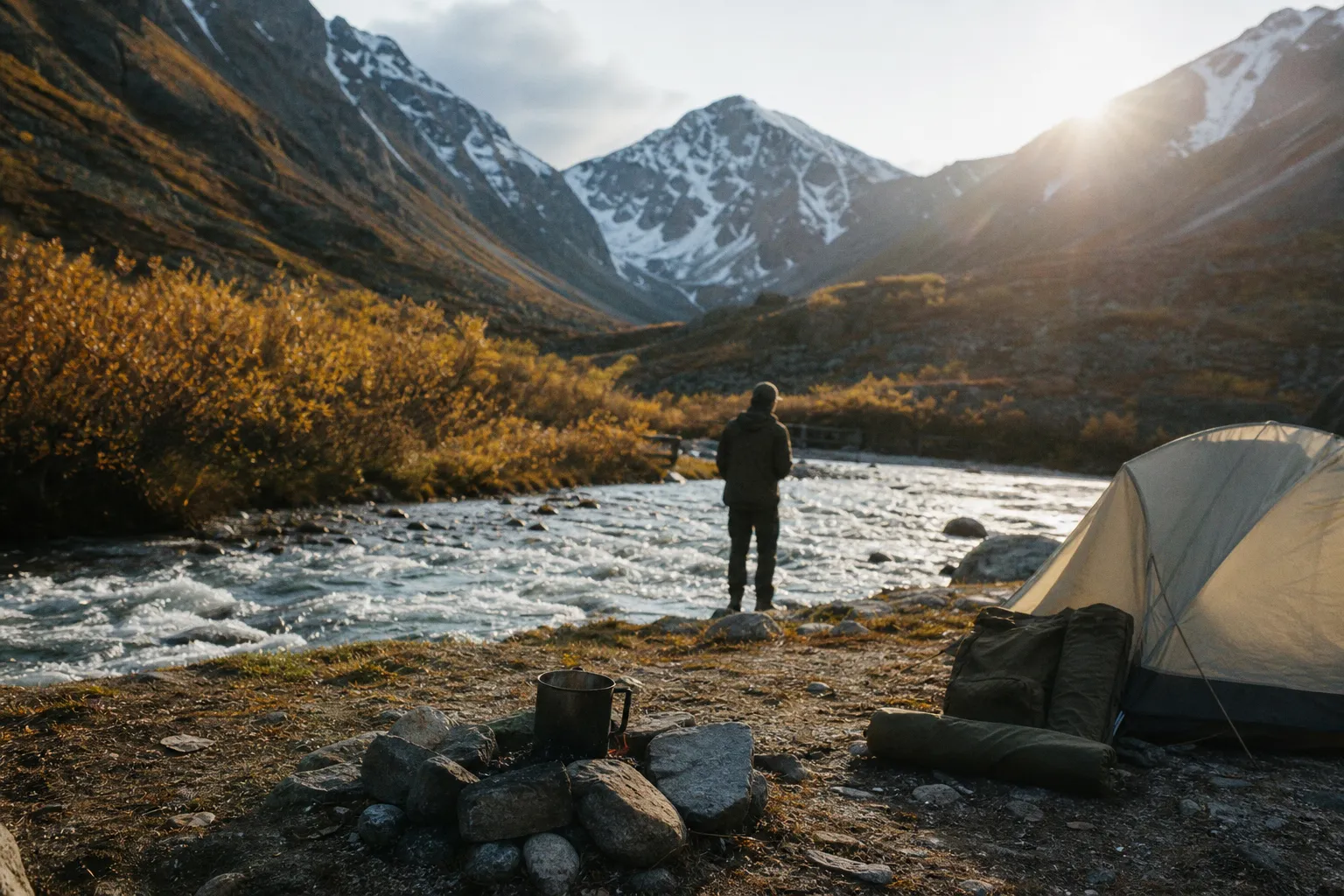
Bushcraft Gear: Why Your Survival Kit Is a Liability Waiting to Fail
The bushcraft industry sells confidence in a tin, and that tin rusts fast when the temperature drops, the trail disappears, and your ferro rod refuses to catch.
I've watched too many otherwise competent hikers show up at a trailhead with a $40 pre-packaged kit they bought at a big-box store, topped it with a fixed-blade knife they saw in a YouTube video, and called themselves ready. They weren't. They were hauling a static pile of objects with no redundancy, no practiced skills, and no idea which items were expired, illegal, or useless for their actual route.
Bushcraft gear isn't a checklist. It's a system of systems. And if you're building yours around a small plastic case stuffed with widgets, you're building it to fail.
The Fallacy of the Pre-Packaged Survival Kit
Kill the romance right now. A pre-packaged "survival kit" is a marketing product. It exists to move units at trade shows and as stocking stuffers. Its design constraint is cost per unit, not your survival margin.
What it gives you:
- One ferro rod, one striker, zero redundancy
- One cheap blade that won't hold an edge through a single batoning session
- A handful of fishing line and hooks that assume you have leisure to fish
- A flimsy space blanket that tears if you look at it sideways
What it doesn't give you is the ability to use any of it under stress.
The first failure mode isn't the gear. It's the operator. A pre-packaged kit assumes you've practiced every item inside it. You haven't. Most people who carry a compass can't take a bearing without a tutorial. Most people who carry a fire starter have never lit one in wind above 15 mph. Most people who carry a first-aid kit can't name half the contents without dumping the pouch.
A survival kit without practiced skills is a heavier pack and the same odds.
Bushcraft survival kit thinking is dominated by the gear-collector mindset. More widgets equals more safety. Wrong. Redundancy is what buys you margin. Two fire-starting methods, two navigation tools, two ways to treat water. Not five ways to signal a passing airliner.
Beyond the Knife: Adopting the NPS Ten Essentials Framework
The U.S. National Park Service doesn't hand out a list of "ten items." They hand out a framework of ten systems. Read that twice. Systems, not products.
| System | What it actually means in the field |
|---|---|
| Navigation | Map + compass AND/OR GPS, plus the knowledge to operate them |
| Headlamp | Light source paired with extra batteries or a backup light |
| Sun protection | Sunglasses, sunscreen, hat — UV exposure compounds fast |
| First-aid supplies | Trip- and person-specific, not a generic pouch from a bin |
| Knife + repair tools | Cutting, fixing, improvising — multi-function, not novelty |
| Fire | Matches, lighter, ferro rod — and a legal place to burn |
| Hydration | Water plus a treatment method, mapped to known sources |
| Emergency shelter | Bivy, tarp, space bag — something between you and exposure |
| Extra food | Calories beyond your planned burn, sized to a delay scenario |
| Extra clothing | Insulation and weather protection matched to the forecast |
Carrying the items isn't the requirement. Knowing how to run the systems is. NPS is explicit: you should know how to use a topographic map, compass, or GPS unit before going out. Owning one is not the same as operating one.
Your bushcraft knife reliability depends entirely on whether you can resharpen it in the field with the stone you brought. If you can't, the knife becomes a liability the first time you hit a knot or bone. A dull blade in survival conditions chews time and calories you don't have.
Heavy-duty camping equipment earns its weight when it serves multiple systems. A fixed blade that can baton kindling, process tinder, and field-dress game covers knife work, fire prep, and food. A good tarp covers shelter, rain catch, and a signal surface. Stop buying single-purpose gadgets and start auditing redundancy across the ten systems instead.
The Reality of Water Treatment and Fire Restrictions
This is where most self-styled "survival experts" lose their teeth. They talk about fire and water as if the environment always cooperates. It doesn't.
CDC guidance is unambiguous on water: boiling is the most reliable way to kill pathogens. Bring clear water to a rolling boil for 1 minute. At elevations above 6,500 feet, hold that boil for 3 minutes. Those numbers aren't lifestyle tips. They're the protocol when downstream contamination, livestock presence, or human waste is in play.
Filtration is not boiling. Most portable water filters do not remove bacteria or viruses. That means the $25 straw hanging off your hydration bladder is not a substitute for boiling or chemical treatment when the source is suspect. Use a filter for sediment and clarity, then run a second treatment method to cover what the filter misses.
And if the water is chemically contaminated — agricultural runoff, mine drainage, algal bloom toxins — boiling won't fix it. Filtering won't fix it. Chemical disinfection won't fix it. You cannot make chemically toxic water safe with consumer-grade gear. That's a hard line. Stop pretending your filter is a magic wand.
Fire is the same reality check with a different failure mode. Carrying fire-starting equipment does not mean you have a fire. Joshua Tree National Park's restrictions, in effect June 15 through October 1, 2026, prohibit wood-burning and charcoal fires — including campfires, warming fires, wood-burning camp stoves, and charcoal grills. You can own the best ferro rod on the market. If the land manager says no burn, you're eating cold food and going to bed cold.
Verify fire rules for your exact destination and date. Not the ranger district. Not "usually." The actual closure order covering your window.
Why Your First-Aid Kit Is Likely Outdated
Open your first-aid kit right now. Look at the expiration dates. Look at the tape. Look at the ointments. If you haven't touched this kit since the season you packed it, it's compromised.
The American Red Cross family-of-four checklist is a starting point, not a finished product: 25 assorted adhesive bandages, 2 absorbent compress dressings at 5 x 9 inches, 2 pairs of large nonlatex gloves, plus the medications and tools for your specific group. NPS aligns with the same logic: start with a pre-made kit, then modify it for the trip and personal medical needs. Check expiration dates. Replace used or out-of-date contents.
Trip-specific means trip-specific. A desert route demands different supplies than a subalpine traverse. You're carrying ibuprofen for a theoretical headache while ignoring the antihistamines you actually need for a bee sting at mile four. You're carrying a tourniquet you'll never use while missing the blister treatment you'll definitely need by mile eight.
Essential wilderness tools include medical supplies you know how to deploy under duress. A hemostatic package in the hands of someone who can't tell the difference between venous and arterial bleeding is a moral liability. Take a course. Practice the skills on your training hikes. Pressure dressings, splints, wound irrigation — these are motor skills, not facts. Skills degrade without reps.
Audit your kit before every trip. Not once a season. Every trip. The cost of a fresh package of gauze is less than the cost of improvising with a dirty sock.
Communication and Navigation: The Skills Behind the Gear
Your phone is not a navigation system. Your phone is a battery with a screen. GPS apps require power, signal for initial map downloads, and a working display. None of those are guaranteed above treeline, in a canyon, or after a soaking rain.
A paper topographic map and a baseplate compass weigh ounces and run forever. Pair them with a personal locator beacon or satellite messenger for emergencies. But here's the part most people skip: NOAA states that 406 MHz personal locator beacons must be registered under federal regulations, the registration is free, and renewal happens every 2 years. An unregistered beacon is a compliance failure. It can also slow search-and-rescue response because the registration data tells rescuers exactly who you are, what you're carrying, and where you planned to be.
Register it. Renew it. Test the device on the schedule the manufacturer recommends.
Navigation is the single most trainable skill in your kit. Take a bearing. Follow an azimuth. Triangulate your position using two known landmarks. Do this in your local park before you trust it on a route with no marked tread. GPS is a tool, not a crutch. When the batteries die, the map and compass need to carry the load without hesitation.
Communication gear follows the same logic. A satellite messenger that you can't operate with cold hands, a busted screen, or a dead battery is dead weight. Practice the SOS function in low-stress conditions until it's muscle memory. Know the device's coverage limits. Manufacturer coverage maps lie. Battery life estimates lie. Your actual performance under stress is the only number that matters.
The wilderness doesn't grade you on what you packed. It grades you on what you can do when the weather turns, the trail vanishes, and the sun drops behind the ridge.
Build the System, Not the Souvenir
Bushcraft gear doesn't fail because the products are bad. It fails because people buy a kit and call it preparation. That's not preparation. That's a purchase receipt.
Build your system around the NPS Ten Essentials framework. Audit each system per trip. Verify fire and water rules for your destination before you leave the driveway. Update your medical supplies and train on the skills they require. Register and renew your emergency beacon. Practice navigation until you don't need the screen.
Bring redundancy. Bring skills. Leave the marketing copy at the trailhead and start treating your kit like the operational tool it actually is.