Why Ultralight Gear Won't Replace Your Trail Training
According to Men’s Health, its 2026 Outdoor Awards put ultralight gear front and center for hiking, camping, and trail running. That matters—but don’t confuse lighter kit with automatic readiness.
Clay Masterson, Backcountry Conditioning Expert & Gear Pragmatist·updated July 21, 2026
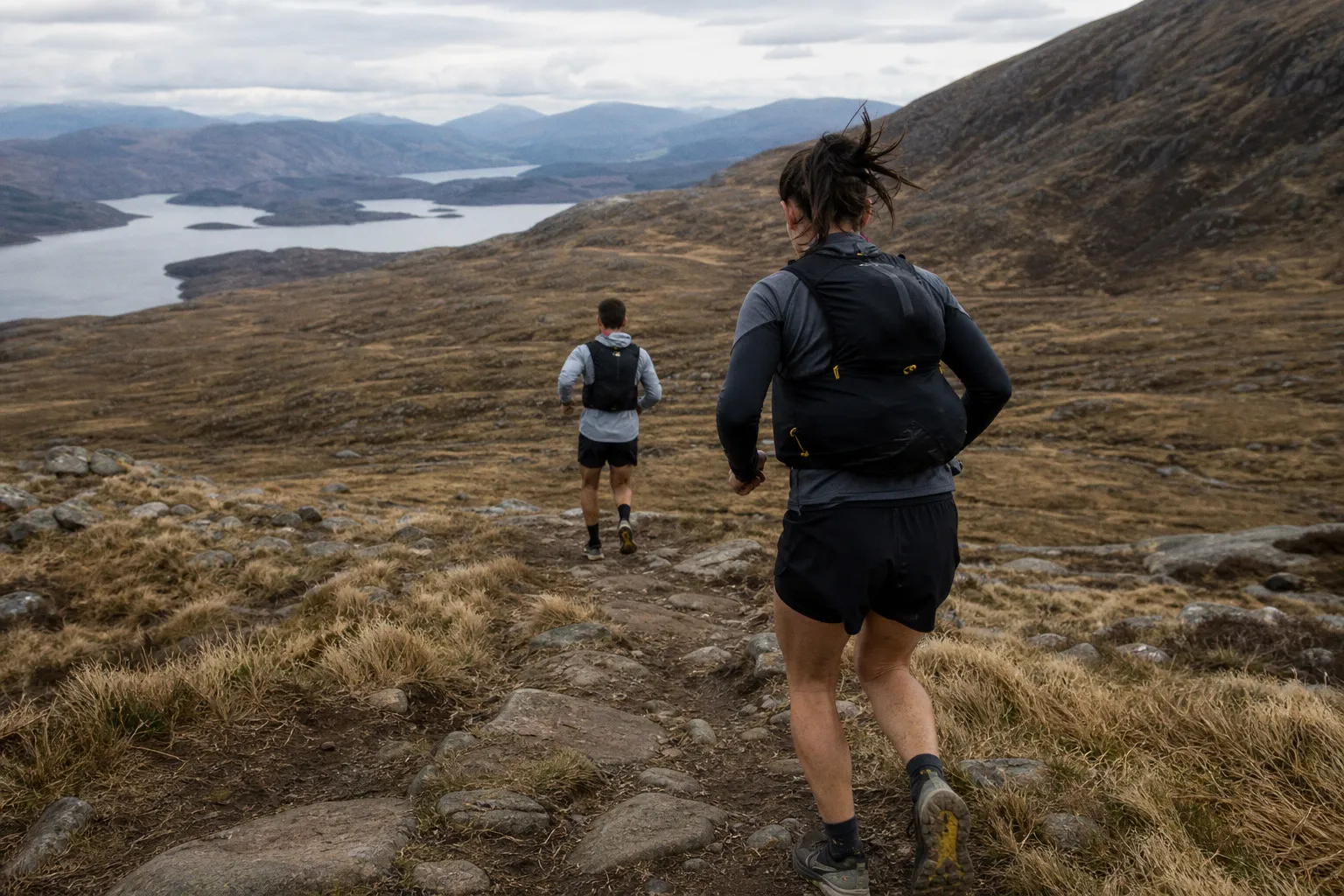
Less weight helps only when it doesn’t shred your footing, load distribution, or ability to keep moving after the route turns ugly.
The awards spotlight products ranging from the Teva Hurricane XLT3 and Danner MTN45 to trail-focused footwear from Arc’teryx and Nike. The headline is clear: brands are chasing lower mass, responsive foams, aggressive rubber, and packable designs. Good. Your legs have hauled enough dead weight already.
Light gear is a tool, not a training plan
Men’s Health describes 2026 as a year of doing more with less, after testing gear across hiking, biking, kayaking, climbing, swimming, and camping. That phrase is easy to market. In the field, it has a harder meaning.
For runners and fast hikers, reducing unnecessary load can clean up cadence and lower the constant torque through the hips and knees. But the system still has to work as a system. A featherweight shoe does not repair sloppy downhill braking. A lighter pack does not make weak calves durable. Carbon underfoot does not replace trail awareness when rocks, roots, and off-camber ground start moving the target.
Use the ultralight trend where it earns its place: remove bulk that contributes nothing to the day. Then put the work into the engine carrying it.
Footwear is getting faster—and demands more from you
Among the winners, Men’s Health highlighted Arc’teryx’s Sylan 2, built with a rockered midsole, supercritical foam, and a carbon plate, as well as Nike’s next-generation Ultrafly with upgraded foam, a full-length carbon-fiber plate, and Vibram Megagrip traction. Those are serious trail-running ingredients: forward roll, protection, grip, and a more aggressive ride.
But fast shoes can make athletes impatient. That is where the breakdown starts.
If you are moving from a conventional trail shoe into a plated or strongly rockered platform, test it on controlled terrain first. Short climbs. Familiar descents. Wet rock only when your mechanics are already dialed. Pay attention to whether you are loading the forefoot differently, overstriding downhill, or letting the shoe’s propulsion pull your cadence beyond what your lower legs can absorb.
The shoe can provide a platform. You still have to steer it.
The real win: carry only what the route requires
The awards also include hiking-oriented options such as the Hoka Mafate Hike Boot, Gregory’s Arrio 24 daypack, compact folding trekking poles, and Merino hiking socks from Gordini. The common thread is not glamour. It is efficiency across long hours outside.
That should be the filter for trail runners who hike, and hikers who want to move faster: what earns its weight after hour four?
A pack needs to stay stable when you run, scramble, or descend—not merely feel comfortable while standing in a store. Poles need to help when the grade grinds upward, then disappear when they become dead cargo. Footwear needs traction and control when fatigue turns clean mechanics into survival shuffling.
Gear is getting lighter. Excellent. Now make sure your movement is strong enough to take advantage of it.