Clay Masterson, Backcountry Conditioning Expert & Gear Pragmatist
July 15, 2026 · 16 min read
Small hiking backpack capacity: is 15 liters really enough?
A 15-liter pack is not “small” in the cute gear-store sense. It is small in the brutal, practical sense: you get room for water, food, a shell, a basic repair-and-first-aid kit, and not much forgiveness after that.
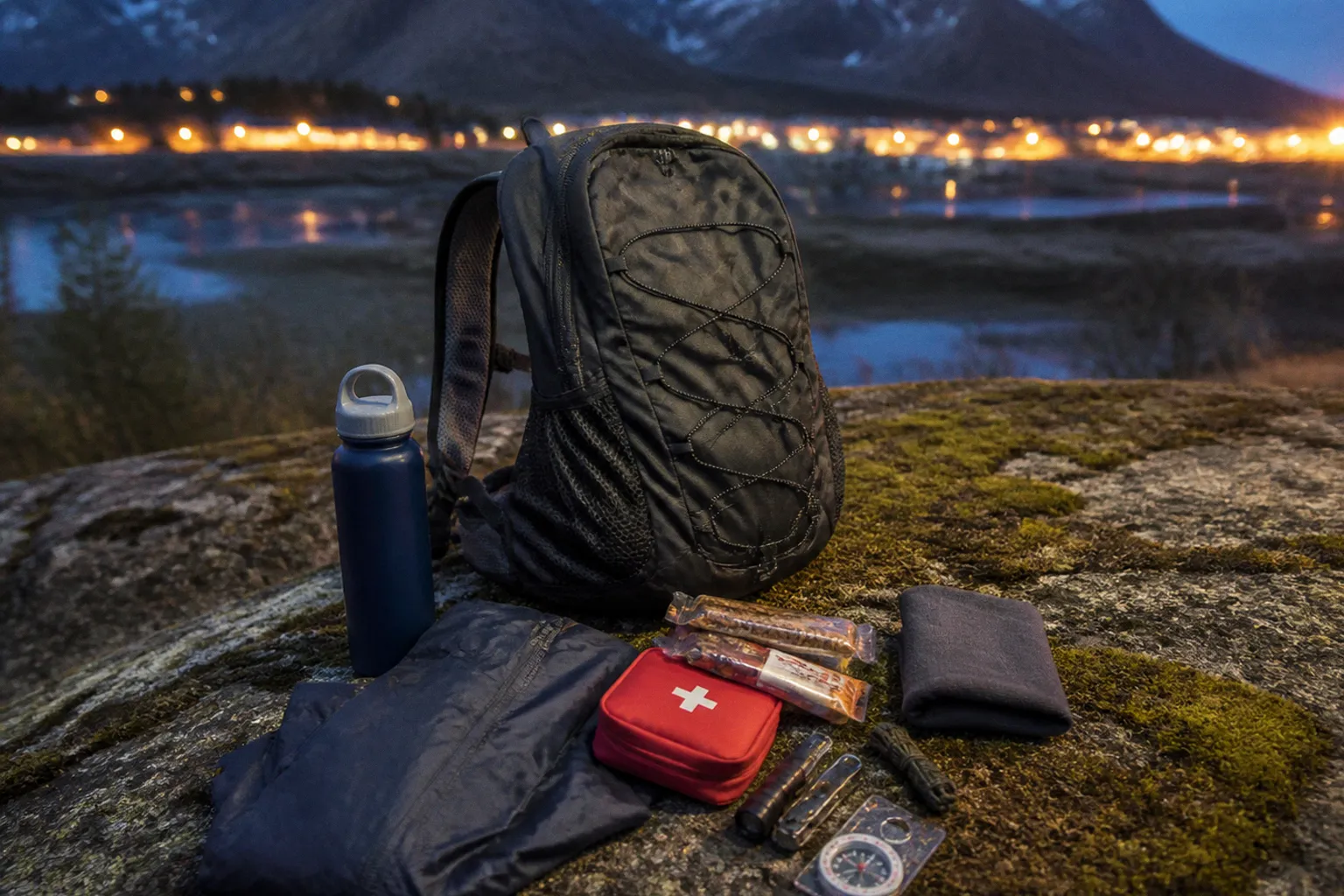
That can be perfect. For a 1- to 4-hour hike in stable weather, a small hiking backpack in the 10–20 liter range can move fast, ride clean, and stop you from hauling junk you packed out of anxiety. But stretch that same pack into a 9-hour shoulder-season ridge day and now you are playing cargo Tetris with safety gear. That is not minimalism. That is bad planning with nicer branding.
The 15-liter sweet spot: where it works and where it starts lying to you
Fifteen liters is a sharp tool. Use it right and it cuts weight, bounce, and clutter. Use it wrong and it cuts your margin.
A small daypack for hiking at this size makes sense when the route is short, the weather is stable, and your exit options are simple. Think local trail loops, fast morning hikes, warm-weather scrambles with no real exposure, mountain bike rides, and trail runs where a vest feels too skimpy but a full daypack feels like a suitcase.
This is the territory where 15 liters shines:
- 1 to 4 hours on trail. You can carry 1–2 liters of water, snacks, a light layer, rain shell, phone, keys, headlamp, basic first aid, and a small emergency kit without turning the pack into a stuffed sausage.
- Fast efforts where cadence matters. Less bulk means less sway. Less sway means your hips, shoulders, and trunk do not waste energy correcting a sloppy load every step.
- Warm-weather hikes with predictable conditions. If the forecast is boring, the terrain is familiar, and you are not climbing into a different weather zone, a minimalist hiking backpack is often enough.
- Conditioning hikes where the goal is movement, not comfort camping. If I am training uphill mechanics or tempo hiking, I want the load tight and honest. No extra fleece “just because.” No stove. No second lunch pretending to be emergency food.
Where people get into trouble is treating pack capacity like courage. They buy a 15L pack, call themselves efficient, then leave behind the layer they actually needed because the pack looked cleaner without it.
That is backwards.
A small hiking backpack should force discipline, not stupidity. The pack does not decide what the mountain requires. Conditions do.
Fifteen liters is enough only when the trail, weather, pace, and your own competence all agree. If one of those breaks, the pack gets small fast.
The dirty detail: volume numbers do not tell the whole story. Backpack volume does not strictly dictate dimensions. One 15L pack might swallow a slim hydration bladder and compress well. Another might be short, rounded, and awkward with anything rigid. Some 15-liter packs cannot fit a standard 13-inch laptop. Others are built specifically around that shape. Same stated capacity. Different real-world use.
That matters on trail too. A narrow alpine-style pack carries a shell, bladder, and repair kit differently than a panel-loading commuter-shaped bag with trail graphics slapped on it. The liter count is the start of the conversation. Not the verdict.
Capacity is not just space. It is load behavior.
Most hikers talk about hiking pack capacity like they are packing a drawer. Wrong frame.
A pack is part of your kinetic chain. Once it is on your back, it changes how your shoulders rotate, how your hips drive, how your trunk stabilizes, and how much braking your legs do on descents. A loose 15L pack loaded badly can feel worse than a dialed 24L pack loaded clean.
The first question is not “Can I fit it?” The first question is “Can I move well with it?”
A good 15-liter setup keeps the dense items close to your spine and high enough that the load does not sag behind your hips. Water is usually the big piece. One liter is one kilogram before the bottle or bladder. Carry two liters and you have already committed serious weight inside a very small system.
Then come the small objects that wreck packing efficiency: first-aid pouch, headlamp, gloves, beanie, snacks, filter, power bank, knife or multi-tool, sunscreen, map, satellite communicator if you carry one. They do not weigh much individually. They create lumps. Lumps create pressure points. Pressure points create fidgeting. Fidgeting wastes energy.
Here is the practical split I use when deciding if 15 liters is enough.
| Use case | 15L small hiking backpack | 20–35L daypack |
|---|---|---|
| Short hike in stable weather | Strong fit. Clean, fast, low bulk. | Often too much space unless compressed well. |
| Trail run or fast hike | Works if it rides tight and has quick-access pockets. | Usually bulky unless designed for fastpacking. |
| Full-day hike, 5–10 hours | Possible only in warm, predictable conditions with disciplined packing. | Better default. More room for food, insulation, and safety gear. |
| Three-season variable weather | Tight and often compromised. | Correct tool for most hikers. |
| Winter day hike | Not enough for most real winter safety margins. | Usually still just the starting point; conditions may require more. |
| Carrying gear for kids, dog, or partner | Poor choice unless someone else carries the rest. | Much more realistic. |
The 20–35 liter range exists for a reason. It is not just for people who pack too much. It is for full-day hikes, changing weather, extra layers, full lunch, more water, traction, navigation backup, and the boring safety items nobody brags about until they need them.
A 15L pack is lean. A 25L pack is forgiving. Do not confuse the two.
Ultralight versus durable: grams are not the whole fight
A lightweight daypack feels great in the hand. It feels even better during the first hour uphill. But empty pack weight only matters after the harness, fabric, and structure have done their job.
There are technical 15L packs around the 430-gram mark, like the Millet Mixt 15. The Osprey Sportlite 15 sits roughly in the 440–510 gram range depending on version and sizing. That is light enough that you notice the absence of weight, especially if you are moving quickly or stacking vert.
Then there are heavy-duty 15L packs like the Savotta Kahakka 15L, built with rugged 500D and 1000D Cordura and weighing about 1.0 kg, or 2.2 pounds, empty. That is a different animal. You are not buying featherweight efficiency. You are buying abrasion resistance, structure, and abuse tolerance.
Neither is morally superior. They are built for different kinds of punishment.
Ultralight packs save energy, but the savings can get eaten if the pack collapses poorly under dense water weight or the shoulder straps bite after two hours. Rugged packs survive being dragged, scraped, and overloaded, but you pay the weight tax every step, even on mellow trail.
I care about these trade-offs more than I care about marketing names.
What actually matters in a 15L pack
Forget the product page poetry. On a small hiking backpack, I look hard at a few things:
1. Harness stability under movement. If the pack bounces when you jog downhill or torque through switchbacks, it is not a fast pack. It is a back-mounted pendulum.
2. Shoulder strap shape and padding density. Thin is fine. Flimsy is not. A small pack still has to carry water weight without sawing your traps raw.
3. Sternum strap placement. A tiny pack with a bad sternum strap can pinch breathing mechanics and make hard uphill efforts feel worse than they should.
4. Hip belt or waist strap usefulness. On many 15L packs, the waist strap is just bounce control, not real load transfer. That is fine. Just do not pretend it is a backpacking suspension.
5. Back panel stiffness. Too soft, and every hard object prints into your spine. Too stiff, and the pack can ride like a board during high-output movement.
6. Pocket logic. A small pack needs better access, not more zippers. I want snacks, phone, filter, and gloves reachable without dumping the main compartment on dirt.
7. Compression. A 15L pack should cinch down when half-full. Dead air creates movement. Movement creates fatigue.
The mistake is buying the lightest spec and then acting surprised when it carries like wet cardboard. Or buying the bombproof tactical brick and wondering why your “minimalist” kit feels slow.
Gear has consequences. Pick yours.
Can you pack the Ten Essentials in 15 liters?
Yes. In the real world, a 10–20 liter backpack can fit the Ten Essentials, a 1–2 liter water reservoir or bottles, snacks, a light fleece or rain jacket, and a basic first-aid kit.
But “can fit” is not the same as “fits cleanly with room for weather changes.” That distinction matters.
The classic Ten Essentials are not one fixed pile of objects. They scale. Navigation might be a phone with offline maps plus a paper backup. Illumination might be a tiny headlamp. Sun protection might be sunglasses and a small sunscreen tube. Insulation might be a wind shell in July or a real fleece in October. Emergency shelter might be a compact bivy, not a full tarp. Fire, repair, nutrition, hydration, first aid — all can be tiny or bulky depending on conditions.
A disciplined 15L loadout for a warm, short day might look like this:
- Water: 1–2 liters, based on heat, effort, and refill options.
- Food: dense snacks, not a picnic spread. Bars, nuts, jerky, gels if you are moving hard.
- Shell: light rain jacket or wind shell. Packable, not fragile nonsense that wets out at the first argument.
- Insulation: light fleece only if conditions justify it. If not, leave the comfort layer and keep the safety layer.
- First aid: blister care, compression wrap, basic meds, wound care, gloves. Small, useful, not a pharmacy.
- Navigation: phone with offline maps, backup power if the route or temperature demands it, paper/map backup when appropriate.
- Light: headlamp. Always. Your phone flashlight is not a plan.
- Emergency items: whistle, fire starter, compact emergency bivy or blanket depending on exposure.
- Tools and repair: small multi-tool, tape, zip ties, whatever matches your kit.
- Personal protection: sunscreen, sunglasses, bug protection, gloves or hat when conditions call for them.
That fits. Barely, if your pack design is awkward. Comfortably, if the pack has smart pocketing and you do not bring bulky packaging.
This is where experienced hikers look boring. They repackage. They trim. They keep the kit tight. They do not carry a full retail box of anything. They do not let a puffy jacket explode loose in the main compartment. They use dry bags or zip pouches only when those actually improve organization, not because social media made color-coded packing look like competence.
Minimalism is not leaving gear behind. It is carrying the right gear without letting sloppy volume management rob you blind.
If you are new, do a floor test before trail day. Lay out the full kit. Not the fantasy kit. The actual kit. Add water. Add food. Add the layer you will reach for when wind cuts across the ridge. Then pack it.
If the zipper is straining at home, it will be worse with cold fingers and a dirty trail shoulder. If the only way to make it work is to crush your rain shell into the shape of a brick and lash lunch outside, the pack is too small or your system is lazy.
The outside of the pack is not free storage
I see this constantly: someone buys a small hiking backpack because they want to move light, then straps half the load to the outside. Jacket flapping. Bottle swinging. Foam pad hanging. Trekking poles mounted like radio antennas. A snack pouch bouncing against the lumbar spine.
That is not efficient. That is a yard sale in motion.
External carry has a place. Trekking pole attachment, helmet carry, wet shell pocket, quick-stash layer — fine. But if your normal setup depends on lashing core gear to the outside because the inside is maxed out, you chose the wrong volume.
External gear causes problems:
- It snags. Branches, brush, rock, chairlifts, trail signs, car doors. The more you hang off the pack, the more the world grabs you.
- It shifts weight away from your back. That increases leverage. Your trunk works harder. Your shoulders get pulled backward. Your stride pays.
- It gets wet or dirty faster. A soaked insulation layer strapped outside is just dead weight with regret attached.
- It slows access instead of improving it. Bad external carry turns every stop into untangling.
- It advertises poor load discipline. Harsh, but true. If your pack looks like it lost a fight with a gear closet, fix the system.
The opposite mistake is just as common: buying a 35L pack for a two-hour hike and filling it because empty space feels wrong. Extra socks. Extra hoodie. Big knife. Giant first-aid kit. Three sandwiches. Camera gear you will not use. The pack invites the load, and the load grinds your cadence down.
This is why pack volume is behavioral. Too small and you start compromising safety or strapping junk outside. Too large and you start feeding the void.
The right pack makes the correct behavior easier.
When 15 liters stops being enough
There is a clean line here: when the hike becomes long enough, cold enough, remote enough, or uncertain enough that your safety gear needs more space, move up.
For full-day hikes in the 5- to 10-hour range, or three-season hiking where weather can swing, the better range is usually 20 to 35 liters. Not because you need luxury. Because you need margin.
A full-day kit adds bulk fast:
- more food, and not just sugar;
- more water or a filter plus container capacity;
- real insulation;
- gloves and hat;
- proper rain protection;
- traction in shoulder seasons;
- larger first-aid and repair items;
- emergency shelter with actual usefulness;
- battery backup if navigation depends on electronics;
- room to stow layers as your output changes.
Output matters. Hike hard uphill and you sweat. Stop on a windy saddle and that sweat turns against you. If your pack has no room for dry insulation or your shell is buried under a crushed mess of snacks and tools, you built a bad system.
Three-season hiking is where people most often underpack. Summer habits hang around too long. They take the same 15L pack into October because it worked in July. Then daylight shrinks, wind sharpens, and the trail gets slick. Suddenly that little pack feels less like discipline and more like denial.
A larger daypack also improves packing order. You can keep emergency gear accessible. You can separate wet layers. You can carry a real lunch without smashing it into your headlamp. You can remove a fleece during a climb without needing a full repack on the side of the trail.
That saves time. More importantly, it saves mental friction. When fatigue climbs, simple systems win.
The fit problem nobody wants to talk about
Small packs are often treated like one-size accessories. Bad idea.
A 15L pack still needs to fit your torso, shoulder width, and movement style. If it rides too low, it bounces into your lumbar area and drags backward. If it rides too high and stiff, it can jam neck movement when you look up steep terrain. If the shoulder straps are cut poorly for your chest, you will fight rubbing, pressure, or restricted breathing all day.
This is worse for fast hikers and trail runners because movement amplifies flaws. Walking gently around a store tells you almost nothing. Load it. Cinch it. Jog a few steps. Hinge at the hips. Reach overhead. Twist. If the pack shifts when your torso rotates, it will shift more when you are tired and descending.
Load distribution matters even in small volumes. Especially in small volumes. You have less space to correct bad placement. Dense items should stay close to the back panel. Frequently used items should not require full unpacking. Soft items can buffer hard edges. Water should not slosh loosely if using bottles; with a reservoir, manage the hose and fill level so it does not balloon the pack into a barrel.
A hydration bladder can be excellent in a 15L pack, but it steals internal structure. Bottles can be easier to refill and track, but side pockets on small packs vary wildly. Some hold bottles like a clamp. Some launch them on the first rocky descent. Test before you trust.
This is the part where I sound demanding because I am. If you train your legs but ignore how the load rides on your body, you are leaving performance on the table. Worse, you are creating little irritations that become big problems five miles later.
My rule for choosing between 15L and 25L
I do not start with volume. I start with consequence.
If forgetting or excluding one item would make the day merely less comfortable, I might stay with 15 liters. If excluding one item would make the day less safe, I size up.
That rule cuts through most gear-store fog.
A 15L pack is right when the kit is naturally small. Not when I have to argue it into being small. If the route demands a warm layer, rain gear, emergency shelter, enough food, and two liters of water, and I can still pack it cleanly, fine. If I am crushing gear, omitting basics, or hanging essentials outside, I move to a 20–35L pack and stop pretending.
A small hiking backpack should feel almost boring when packed correctly. Zippers close without a wrestling match. Nothing rattles. Nothing swings. The shell is reachable. Water is stable. Snacks are accessible. Emergency items have a known place. The load hugs the back without torquing the shoulders.
That is the standard.
Not the Instagram weight. Not the product title. Not the word “minimalist” printed in a font designed to make you feel faster.
Fifteen liters can be enough. For short, fast, stable days, it may be the best choice you own. It trims noise. It keeps your stride clean. It makes you choose like an adult.
But when the day gets longer, weather gets messy, or your gear list grows for real reasons, size up. Carrying the right volume is not weakness. It is trail discipline. The wilderness does not care that your pack looked sleek at the trailhead. Your knees, shoulders, and cold hands will care about what you actually brought.