Clay Masterson, Backcountry Conditioning Expert & Gear Pragmatist
July 13, 2026 · 14 min read
Bushcraft survival is more about mindset than gear
A $400 knife will not fix a frozen brain. A titanium cookset will not make decisions for you when rain has soaked your insulation, daylight is bleeding out, and your hands have started to fumble.
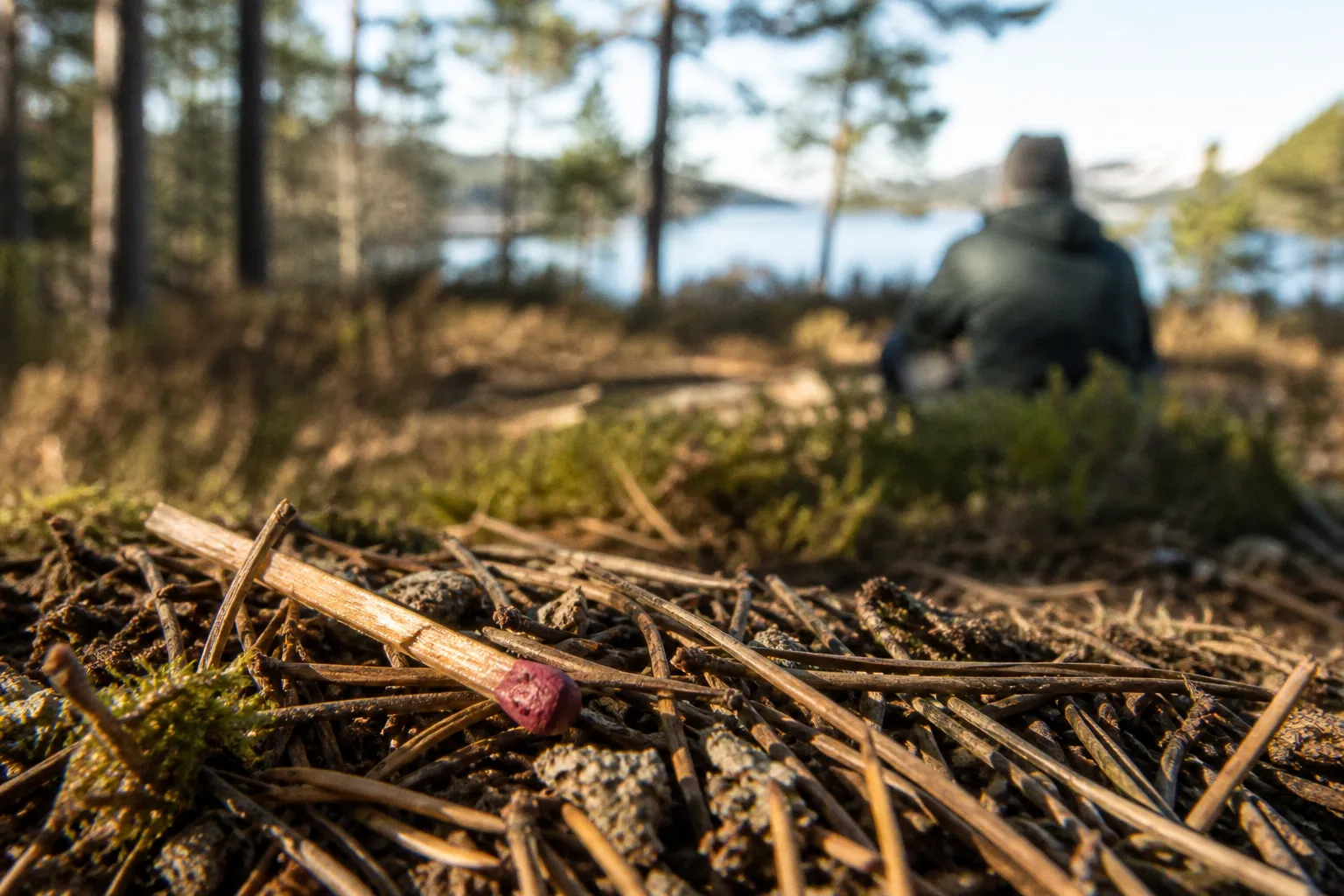
That is the dirty little truth behind bushcraft survival: most people are shopping for confidence instead of building it. They want the pouch, the blade, the ferro rod, the waxed canvas, the curated flat-lay photo of readiness. Fine. Gear helps. I carry it. I test it. I break it. But if your plan falls apart the second one item goes missing, you do not have a survival system. You have a receipt.
Bushcraft survival starts between the ears. Then it moves into the hands. Then the feet. Then the whole kinetic chain under load, cold, hunger, fatigue, and doubt. That order matters.
The hard philosophy: self-reliance is not cosplay
Bushcraft gets sold badly now. Too much leather. Too much beard oil. Too many people carving feather sticks ten feet from a parking lot and calling it wilderness competence.
The older idea is tougher and cleaner. The term “bushcraft” was popularized in the Southern Hemisphere by Mors Kochanski and later pushed into broader global awareness by Ray Mears. Different styles. Same backbone: learn how to use natural materials instead of leaning entirely on manufactured gear.
That does not mean “go naked into the woods and prove something.” That is not skill. That is ego with hypothermia pending.
Real bushcraft is adaptive competence. You look at a place and ask sharper questions:
- What can keep me warm here?
- What burns here, even when damp?
- What can I cut, split, bind, bend, carry, filter, signal with?
- Where is wind moving?
- Where will cold settle?
- What is my body doing right now, and what will it be doing in two hours?
That is not romantic. That is workload management.
I’ve watched strong hikers unravel because they had no mental model for discomfort. They were fit enough to haul weight uphill. They were not trained to think while miserable. Big difference. The wilderness does not care about your VO2 max if you panic and start burning calories in circles.
Gear can extend your margin. It cannot supply judgment after your judgment has left the building.
The survival bushcraft philosophy worth keeping is simple: your kit should support your skills, not impersonate them.
The Rule of Threes is not a slogan. It is triage.
The Rule of Threes gets repeated so often that people stop hearing it. That is a mistake.
You can think of it like this:
| Survival pressure | Rough limit | What it means in the field |
|---|---|---|
| Air | 3 minutes | Breathing, airway, injury, panic control come first. No debate. |
| Shelter in extreme conditions | 3 hours | Exposure can shred you fast. Wind, wet clothing, and cold ground are the enemy. |
| Water | 3 days | Dehydration wrecks decision-making before it kills you. |
| Food | 3 weeks | Hunger is ugly, but it is usually not the first fire to put out. |
This is not a laboratory promise. It is a prioritization tool. Use it that way.
Most beginners get survival order wrong because hunger is loud. So they start thinking about trapping, fishing, edible plants, camp cooking, all the fun stuff. Meanwhile they are sweating through a base layer at dusk and have no wind block. That is how problems compound.
In bushcraft survival, shelter usually deserves more respect than it gets. Not the shelter you fantasize about building. The shelter you can actually build with your current hands, current tools, current daylight, current fuel level, and current weather.
There is a brutal math to this:
1. Wet plus wind strips heat fast. You need separation from moving air and wet ground. A debris hut, lean-to, snow trench, tarp pitch, spruce bough bed, or emergency bivy all answer the same basic demand: slow heat loss.
2. Fire is not automatic warmth. A bad fire under bad conditions eats time and calories. If you cannot process fuel, protect flame, and build a reflector or coal base, you may be making smoke instead of heat.
3. Water is not just a drinking problem. Finding it, carrying it, treating it, and not contaminating your container all require systems. Skill keeps the system clean.
4. Food is usually delayed. Unless you are in a long-term backcountry situation, calories matter less than temperature, hydration, injury control, and navigation.
The Rule of Threes keeps you from chasing the wrong task because your nerves are barking.
That is why I drill it with people under mild stress. Not in a chair. Not while sipping coffee and admiring a new knife. Put a pack on. Move for an hour. Let your heart rate climb. Then stop and ask: what is the first survival priority right now?
If the answer is “make a bow drill set” while dark clouds are stacking and your shirt is damp, you are not thinking. You are performing.
S.T.O.P. before you start making expensive mistakes
Panic burns fuel. Mental fuel. Physical fuel. Time. Daylight. Heat. It turns a manageable problem into a junkyard of bad decisions.
That is why the S.T.O.P. protocol matters:
- Stop. Freeze the spiral. Do not thrash. Do not stomp around “just checking.” Stop bleeding energy.
- Think. Name the actual problem. Lost? Cold? Injured? Out of water? Separated from gear? Rank the threat.
- Observe. Look hard. Terrain. Weather. Drainages. Wind. Materials. Your body. Your partner’s body. The map if you have it. The sky if you don’t.
- Plan. Build the next three moves. Not the next thirty. Three clean moves beat one heroic mess.
I like S.T.O.P. because it is plain. No mystical wrapper. No nonsense. It forces a gap between stimulus and action. That gap is where survival lives.
Psychological resilience is often called the survival mindset, and for good reason. Panic is a leading cause of failure in survival situations because it attacks sequencing. You stop doing first things first. You skip steps. You overcommit to weak ideas. You walk when you should shelter. You split up when you should consolidate. You dump your pack to “move faster” and throw away the layers that would have kept you functional.
A calm person with modest kit can often stabilize a bad situation. A panicked person with premium kit can turn a minor navigation error into a full rescue.
Here is the unsexy training prescription: practice being uncomfortable without becoming stupid.
That means:
- hike in cold rain close to home and learn how your layers actually behave;
- pitch your tarp with gloves on;
- start a fire after soaking your hands in cold water;
- make hot food when you are tired, not when you are fresh;
- navigate a short off-trail bearing without touching your phone;
- sit still for ten minutes after realizing you made a wrong turn, then make a plan.
That last one is harder than it sounds. The body wants motion. Motion feels like control. Often it is just panic with boots on.
The first primitive skill is not fire. It is refusing to sprint into a worse problem.
Primitive skills are physical skills, not trivia
You do not learn bushcraft survival skills by reading captions. You learn them through repetition, friction, failure, and correction.
Friction fire is the classic example. Everybody loves the idea. Few love the workload. Bow drill and hand drill methods demand material selection, pressure control, spindle speed, notch geometry, ember handling, tinder prep, and patience. Miss one piece and you get dust. Maybe smoke. No coal.
That is not failure. That is feedback.
The same goes for shelter construction using natural debris. People underestimate volume. A proper debris shelter takes more material than beginners think. You need insulation below you, not just over you. Cold ground will siphon heat like a thief. Your roof needs thickness. Your entrance needs control. Your frame needs to hold under shifting weight and weather.
Natural cordage is another humbling teacher. Plant fibers do not care that you watched a video. You need to know what species work in your area, when to harvest, how to process, how to reverse-wrap, how to splice, and how much strength the final cord actually has. Bad cordage fails under load. Then your shelter sags, your bundle spills, your trap breaks, or your repair gives out.
These are not “old-timey crafts.” They are load-bearing skills.
The skills that expose your weak spots
If you want useful wilderness bushcraft tips, stop trying to learn everything at once. Pick skills that punish sloppy thinking.
1. Fire under poor conditions. Use a ferro rod, matches, lighter, and friction methods. Learn the difference between ignition and sustainable fire. Tiny flame is not success. A coal base and processed fuel are success.
2. One-hour emergency shelter. Give yourself sixty minutes and only what you normally carry. Then do it again using natural materials. Measure comfort by heat retention, ground insulation, and wind protection, not by how good it looks.
3. Water route planning. On a map, predict where water should be. Then verify on foot. Learn how ridgelines, drainages, snowmelt, and seasonal flow change the game.
4. Cordage from local plants. Do not practice with perfect store-bought fiber and call it done. Work with what grows where you actually travel.
5. Knife work when tired. Slow down. Poor cutting mechanics lead to blood. Blood complicates everything. Keep the blade path out of your body line. Lock the wrist. Use controlled pressure.
6. Navigation after fatigue. A compass is simple until your brain is cooked. Practice when tired enough to make mistakes but not so tired you become unsafe.
Bushcraft skills should make you harder to rattle. If your practice only works in clean weather, flat light, and good mood, it is hobby craft. Nothing wrong with that. Just do not confuse it with survival capacity.
Gear is a force multiplier. Stop asking it to be a personality.
Now we hit the gear argument. People love turning this into a cage match: bushcraft gear vs mindset. That is lazy.
Gear matters. A sharp fixed blade, reliable fire starters, a metal container, cordage, insulation, water treatment, navigation tools, headlamp, first-aid supplies, and emergency communication can change outcomes. I am not interested in fake purity. Modern search and rescue exists for a reason. Emergency beacons exist for a reason. Carry the tools. Know how to use them.
But gear does not erase the need for skill. It magnifies the skill already there.
A strong shelter builder with a tarp can move fast and stay dry. A weak shelter builder with the same tarp makes a flapping sail that dumps rain down his neck. A practiced fire maker with a ferro rod can turn marginal tinder into heat. A beginner can shower sparks into wet bark until dark and then blame the rod.
Here is the clean way to think about it:
| Item | What it gives you | What it cannot do |
|---|---|---|
| Fixed blade knife | Cutting, carving, splitting small wood, food prep, repairs | Teach safe mechanics or material judgment |
| Ferro rod | Hot sparks in wet conditions | Build tinder prep, fuel processing, or fire structure for you |
| Tarp | Fast weather protection | Choose site, manage wind, or insulate you from ground |
| Paracord | Strong, ready-made binding | Replace knowledge of knots, tension, or natural cordage |
| Metal bottle or pot | Boiling water, cooking, snow melting | Find water or prevent dehydration from bad planning |
| GPS or phone | Position data and route help | Fix dead batteries, poor judgment, or panic walking |
| Emergency communicator | Rescue contact when needed | Substitute for prevention, signaling basics, or staying put when appropriate |
That last line matters. Bushcraft is not a replacement for emergency protocols. If a situation is life-threatening, use the modern tools. Hit the SOS. Call for help if you can. Signal. Stabilize. Stay locatable.
The point is not to reject gear. The point is to stop worshiping it.
I want gear that disappears into the work. Not gear that needs a speech. If a tool saves time, reduces injury risk, and holds up under abuse, good. If it only makes you feel rugged while adding bulk and complexity, cut it.
Build a mindset that holds under load
Mindset is not a motivational poster. It is trained behavior under pressure.
For bushcraft survival, I care about four traits.
1. Sequencing
Can you do the right task in the right order?
That is the Rule of Threes in action. Airway. Injury. Shelter. Fire. Water. Signaling. Navigation. Food way down the line unless the situation becomes extended.
Beginners often fail because they do five useful things in the wrong order. That still fails.
2. Friction tolerance
Can you keep working when things are annoying?
Cold fingers. Damp socks. Smoke in the face. Knife slipping on knotty wood. Cordage unraveling. Mosquitoes sawing at your neck. Hunger making you short-tempered.
This is where excuses breed. Kill them early. Field competence grows when you can absorb friction without throwing your plan in the dirt.
3. Honest self-auditing
Do you know what you can actually do?
Not what you watched. Not what you bought. Not what you did once in perfect conditions. What you can repeat when tired.
A good self-audit sounds like this:
- I can light a stove in bad weather, but my natural fire skills are weak.
- I can navigate on trail, but off-trail bearing work needs practice.
- I can build a tarp shelter fast, but my debris shelter is too thin.
- I carry cordage, but I cannot make strong natural cordage yet.
- I know edible plant theory, but not enough local identification to bet my gut on it.
That is useful. It gives you work.
4. Calm aggression
Sounds contradictory. It is not.
You need calm enough to think and aggressive enough to act. Sitting around waiting for confidence to arrive is useless. Once you have a plan, move with intent. Process wood. Build shelter. Treat water. Mark your location. Layer up. Stop heat loss. Make the next move.
No drama. No flailing. Just work.
The training plan nobody wants because it is not shiny
If you want better bushcraft survival skills, stop buying duplicates of gear you already own and spend that time doing ugly reps.
Try this for one month.
Week one: fire discipline. Three sessions. Different weather if possible. Build fires using only dead natural tinder and fuel you process yourself. Use a lighter once, matches once, ferro rod once. If conditions are safe and legal, attempt friction fire. Track what failed.
Week two: shelter and heat. Build one tarp shelter and one natural debris shelter. Lie in each for thirty minutes. Feel the ground loss. Feel the drafts. Fix them. Do not just take a photo and leave.
Week three: water and navigation. Plan a short route around likely water sources. Carry a map and compass. Confirm what is flowing and what is dry. Treat water by your normal method. Notice how much time it takes.
Week four: low-comfort integration. Do a controlled half-day outing in poor but safe conditions. Carry normal emergency gear. Practice S.T.O.P. at least twice. Make a hot drink. Build a small working shelter. Navigate a short leg. Keep your head clean.
This is not extreme. It is basic. That is the point.
You are not trying to become a legend. You are trying to become harder to surprise.
Final position: buy less confidence, build more competence
Bushcraft survival is more about mindset than gear because the mind sets the order of operations. It decides whether you stop or spiral. It chooses shelter before snacks. It notices wind, wet, fatigue, and fear before they stack into a real threat.
Gear still matters. Bring it. Maintain it. Test it until the weak pieces reveal themselves. But do not confuse ownership with capability.
The wilderness exposes fake competence fast. It does not care what brand is stamped on your knife or how tactical your pouch looks. It cares whether you can stay calm, protect your body, read the terrain, use what is around you, and keep solving the next problem.
That is the work.
Do the work before you need it.