Clay Masterson, Backcountry Conditioning Expert & Gear Pragmatist
June 22, 2026 · 13 min read
Testing My Frozen Water Filter Saved My Appalachian Hike
Here's a number that should stop you cold: every hollow-fiber membrane water filter on the market — Sawyer, Katadyn, LifeStraw, pick your brand — is permanently compromised the moment the water trapped inside its fibers freezes.
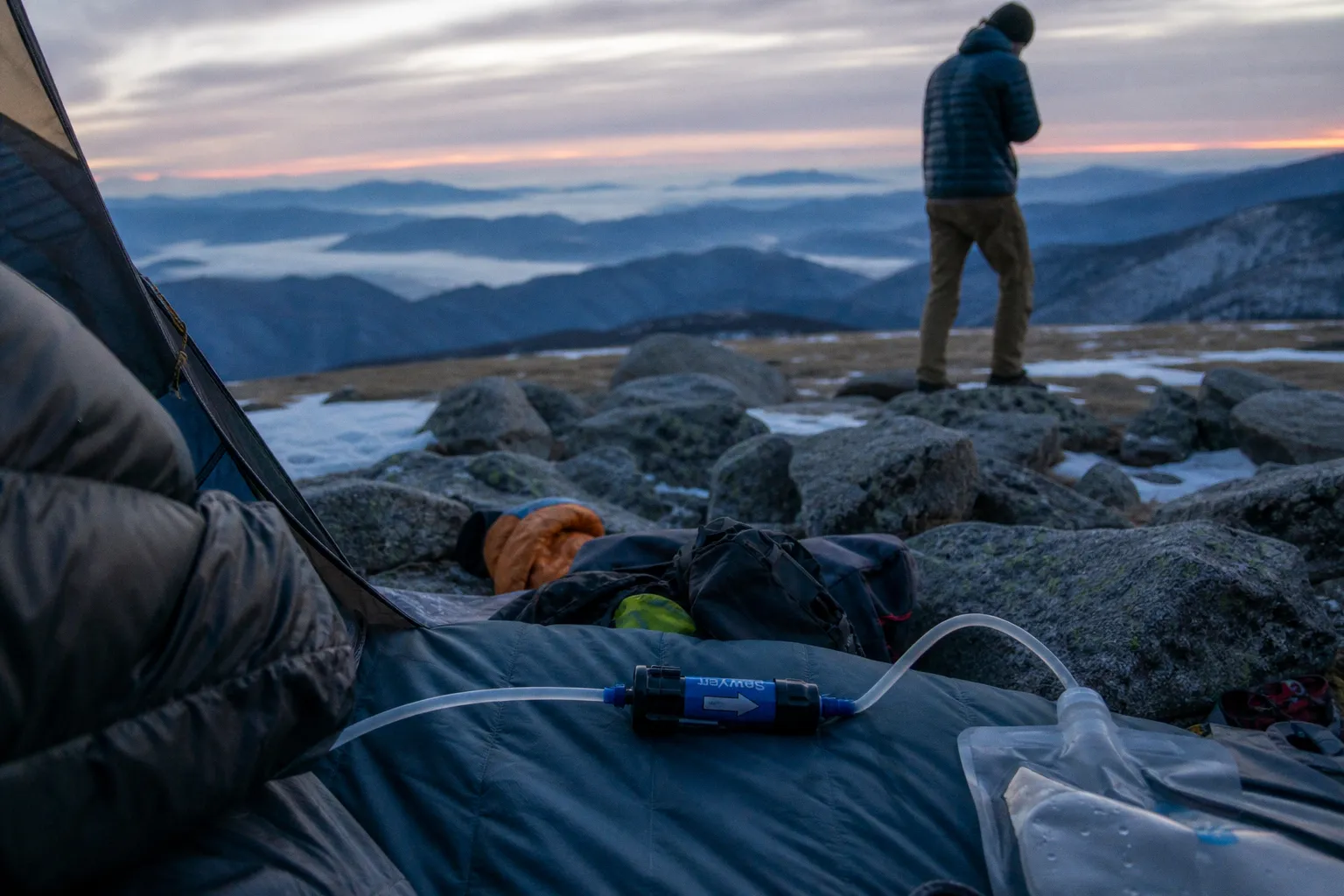
The symptoms of those infections aren't subtle. Giardiasis hits you with explosive diarrhea, cramping, nausea, and fatigue that can sideline you for weeks — even with treatment. Cryptosporidiosis is nastier: persistent watery diarrhea, dehydration, and a recovery timeline that stretches into months for immunocompromised hikers. Neither is something you want to self-diagnose forty miles from the nearest road crossing on the Appalachian Trail. And the cruel irony is that a compromised filter doesn't taste different, smell different, or look different. The water flows clear. You drink it. Then you spend the next seventy-two hours regretting every sip.
The Physics of Failure: Why Ice Expansion Destroys Microscopic Pores
Water is one of the few substances on Earth that expands when it freezes. That's not trivia — that's your filter's execution order.
For related context, see Consumer tech and gadget reviews: how-to and fixes, buying guides, apps and software,.
For related context, see Home fitness and HIIT: home workouts, HIIT and cardio, yoga and mobility, bodyweight.
A hollow-fiber membrane filter works by forcing water through thousands of hair-thin tubes, each lined with pores so small they physically block bacteria and protozoa. We're talking 0.1 microns. For reference, a human red blood cell is about 7 microns across. These pores are engineered with tolerances measured in millionths of a meter. The entire system relies on structural precision — every pore uniform, every fiber wall intact. It's an elegant piece of engineering that functions exactly as designed until the laws of thermodynamics intervene.
When water inside those fibers freezes, it expands roughly 9% by volume. That expansion doesn't gently stretch the membrane. It tears it. The ice crystals generate radial force against the pore walls from the inside out, creating micro-fractures that are invisible to the naked eye but catastrophic at the molecular level. One freeze-thaw cycle is enough. Your filter doesn't need to sit in a freezer for a week — it just needs to drop below 32°F long enough for the internal moisture to crystallize. Depending on the ambient temperature and how much residual water remains in the fibers, that window can be as short as thirty minutes.
Your filter doesn't degrade after freezing. It ruptures. There is no "mildly damaged" state — it's compromised or it isn't.
The damage is irreversible. No amount of backflushing, chemical treatment, or wishful thinking restores the structural integrity of those pores. A frozen filter is a dead filter. Period. The question isn't whether it's broken — it's whether you can prove it's broken before you drink from it.
This distinction matters because of how the filter industry communicates. Most manufacturers include freeze warnings in their documentation, but the language is buried in fine print and phrased with qualifiers that downplay the severity. "Avoid freezing" reads like a suggestion, not a critical safety instruction. It should say: "If this filter freezes, throw it away." The responsibility falls on you to understand why.
The Shake Test: Identifying Internal Membrane Ruptures in the Field
This is the first check you run. It takes five seconds. No tools. No excuses.
Hold your filter vertically and shake it hard — three or four sharp snaps, like you're trying to get the last drops out of a bottle. Then listen. What you're listening for is a rattling sound coming from inside the housing.
That rattle? Those are broken fiber fragments. When the membrane ruptures, pieces of the shattered hollow fibers break loose inside the casing. If you hear them clinking around, your filter is done. Pack it out, don't drink from it, buy a new one.
But here's the critical caveat: silence doesn't mean safety. A filter can sustain freeze damage without producing loose fragments. The fibers might crack in place — pores fractured, integrity gone — but still held firmly enough that nothing rattles. The shake test is a positive indicator. A rattle means certain failure. No rattle means inconclusive. You need to go deeper.
This is where most hikers screw up. They give it a shake, hear nothing, shrug, and start pumping creek water through a compromised filter. Confirmation bias is a hell of a drug in the backcountry. You're tired, you need water, and you don't want to face the possibility that your primary purification method is now a hundred-dollar paperweight. Don't let convenience override the science.
I've talked to section hikers on the AT who ran the shake test, heard nothing, and continued using a filter they suspected had frozen — only to spend their next zero day hunched over a privy. The shake test is valuable. But it's the beginning of the diagnostic process, not the end.
Conducting a Formal Integrity Test: The Dry-Air Pressure Method
If the shake test is inconclusive — and you should treat it as inconclusive unless you hear that unmistakable rattle — you move to the dry-air pressure test. This is the only field method that gives you a definitive answer on hollow-fiber integrity.
Here's how it works, step by step:
1. Disconnect the filter from any hose, bladder, or adapter. You need the bare filter housing, input and output ends exposed to air. Remove any inline attachments, quick-connect fittings, or pre-filters that could mask the results.
2. Blow hard into the input end. Seal your lips around it and push a strong, steady breath through the filter. You should feel significant resistance. A healthy hollow-fiber membrane is designed to allow water to pass under pressure while blocking air with relative efficiency. If you can blow through it like you're blowing through a straw in a milkshake — or worse, with almost no resistance — the pores are compromised.
3. Test the reverse direction. Blow from the output end. Compare resistance. On an intact filter, air should meet substantial resistance from both directions, though the input side may feel slightly more open by design.
4. If air passes through freely in either direction, the membrane is destroyed. Discard the filter. Do not use it. A damaged hollow-fiber filter will still pass water — and that's exactly what makes it dangerous. You won't taste the cryptosporidium.
A compromised filter still lets water flow. That's not a feature — it's a trap.
Some hikers carry a small syringe for backflushing. You can adapt that syringe for a more controlled air-pressure test: fill it with air, attach it to the filter input, and depress the plunger. If the air pushes through with minimal resistance, the fibers are gone. This method gives you a slightly more consistent pressure than blowing by mouth, which can help if you're testing in marginal conditions where your hands are cold and your breathing is labored from exertion.
Is this method as precise as a laboratory integrity test? No. A formal test uses calibrated pressure gauges and measures exact airflow rates against manufacturer specs. Labs run tests like the bubble-point test or the pressure-hold test — procedures that require equipment you're not carrying on a three-day loop through the Smokies. But you're on a ridge at 2 a.m., not in a lab. The dry-air method gives you a binary result — intact or compromised — and that's enough to make a safe decision.
One practical note: if your filter has a built-in backflush mechanism or check valve, the dry-air test results can be slightly misleading. Check valves introduce their own resistance. If you're uncertain about what you're feeling, test a known-good filter at home before your trip so you have a baseline for what normal resistance feels like. Muscle memory for proper resistance beats guessing in the field.
The Dangerous Myth of Flow Rate: Why Fast Water Doesn't Mean Safe Water
This is where people die a little inside when they hear it: flow rate means nothing after a freeze event.
"But the water still comes through fine." Yeah. So does E. coli.
A hollow-fiber filter works by exclusion. The 0.1-micron pores are the barrier. When those pores crack, the fibers don't seal shut — they open wider. Water flows faster through a damaged filter, not slower. A filter that suddenly feels "easier to pump" after a cold night isn't performing better. It's failing catastrophically and you're too relieved to notice.
Think about it like a window screen. Poke holes in it. Air flows through more freely. That doesn't mean it's keeping bugs out anymore.
| Sign | Intact Filter | Compromised Filter |
|---|---|---|
| Flow rate after cold exposure | Normal, consistent with prior use | Faster than expected, noticeably easier |
| Air-pressure test resistance | Strong resistance from both directions | Air passes freely with minimal effort |
| Shake test result | No rattle, fibers silent | Possible rattle (fragments), but silence is inconclusive |
| Visible appearance | No change | No change — damage is internal |
| Water taste or clarity | Normal | Normal — this is why it's dangerous |
This is the single most dangerous misconception in backcountry water treatment, and I've watched experienced thru-hikers fall for it on long sections where they couldn't afford to lose their filter. The sunk-cost fallacy hits hard on day fourteen of a trail. You've invested in the filter, you've carried it for two weeks, you don't want to carry an extra pound of backup purification, so you convince yourself the filter is fine because water still comes through. That cognitive shortcut can put you in a hospital bed.
Flow rate degradation happens when filters clog with sediment or biological buildup. A filter that's harder to pump than usual likely needs backflushing or chemical cleaning — that's maintenance, not catastrophe. But a filter that's easier to pump after a freeze event? That's a red flag the size of a bedsheet. The distinction between clogging (normal) and increased permeability (dangerous) is one every hiker carrying a hollow-fiber filter should understand cold. Pun intended.
If you suspect your filter froze — even a maybe, even a "it was pretty cold last night" — you test it. If the integrity test fails, you switch to chemical treatment, UV purification, or boiling. Period. No debate. No "well, it's probably okay." Probably is how thru-hikers end up sharing war stories about explosive diarrhea in trail shelters.
Proactive Thermal Management: Keeping Your Filtration System Above 32°F
The best freeze-damage test is the one you never have to run. Thermal discipline isn't complicated, but it requires habits — specifically, habits you commit to before the cold hits so they're automatic when you're too exhausted to think straight.
At night: Your filter sleeps inside your sleeping bag, tucked against your torso. Not in the tent vestibule. Not in your pack. Not in an outer pocket. Your body generates roughly 75–100 watts of heat at rest — more than enough to keep a small filter above freezing if it's in your insulation layer. Stash it in a zip-top bag first so residual water doesn't dampen your sleeping bag liner. This is non-negotiable below 40°F.
On the move: Keep the filter in your core pack, buried among insulating layers — spare clothes, sleeping pad, anything that buffers against ambient cold. The exterior mesh pocket of your pack is the coldest real estate you own. Wind chill strips heat from exposed items faster than you'd expect, and a filter riding in that pocket during a four-hour morning hike at 30°F is a filter that may be freezing right now. Stop putting sensitive gear there in winter.
During transport: If you're driving to a trailhead in winter and your pack rides in the bed of a truck or an unheated trunk, your filter can freeze before you even start hiking. Bring it inside the cab with you. This one catches a surprising number of people — they protect the filter religiously on trail but lose it in transit.
After use: Shake out as much residual water as you can before storing. Less water inside the fibers means less expansion force if temperatures do drop. A dry filter is a safer filter. Blow air through both directions, tap it against your palm, and give it time. This also applies to the housing and hoses — drain everything. In sub-freezing conditions, I'll hang the filter inside my tent vestibule with the caps off for thirty minutes before bed, then move it into my bag. Belt and suspenders.
Chemical backup: Carry a small supply of chemical treatment — chlorine dioxide tablets or drops — as insurance. Not as your primary method, but as a failsafe if your filter fails the integrity test and you're days from resupply. Aqua Mira drops weigh a couple of ounces and treat water in fifteen minutes. Katadyn Micropur tablets are lighter still. Having a backup means you're never forced to choose between dehydration and drinking suspect water.
For anyone investing in outdoor leadership education — whether through formal wilderness medicine courses, guide certification programs, or dedicated backcountry skills workshops — water treatment is a foundational module that goes beyond recreational filtering. Organizations like NOLS, SOLO, and the National Outdoor Leadership School cover both field treatment and the underlying microbiology in depth. If you're serious about competence in the backcountry, structured education fills the gaps that gear reviews and forum threads leave open.
The reality is this: freeze damage to hollow-fiber filters is a binary event. You can't mitigate partial damage. You can't nurse a compromised filter back to health. You either caught it in time or you didn't. The tests I've described above take less than two minutes combined. Two minutes between safe water and a week of intestinal misery.
I carried my Sawyer out of the Smokies that morning. The dry-air test showed it was still intact — I'd caught it before the temperature dropped low enough, long enough, to do real damage. But I ran the test anyway. Because the wilderness doesn't care about your schedule, your gear budget, or your plans for the next town stop. It only cares about the laws of physics. And physics says water expands when it freezes.
Your filter doesn't get a vote.