Clay Masterson, Backcountry Conditioning Expert & Gear Pragmatist
July 25, 2026 · 15 min read
Wilderness survival skills training: why books aren't enough
A wilderness survival book can tell you how to orient a map. It cannot tell you whether you can orient one when the trail has vanished under snow, your hands are cold, daylight is draining, and the…
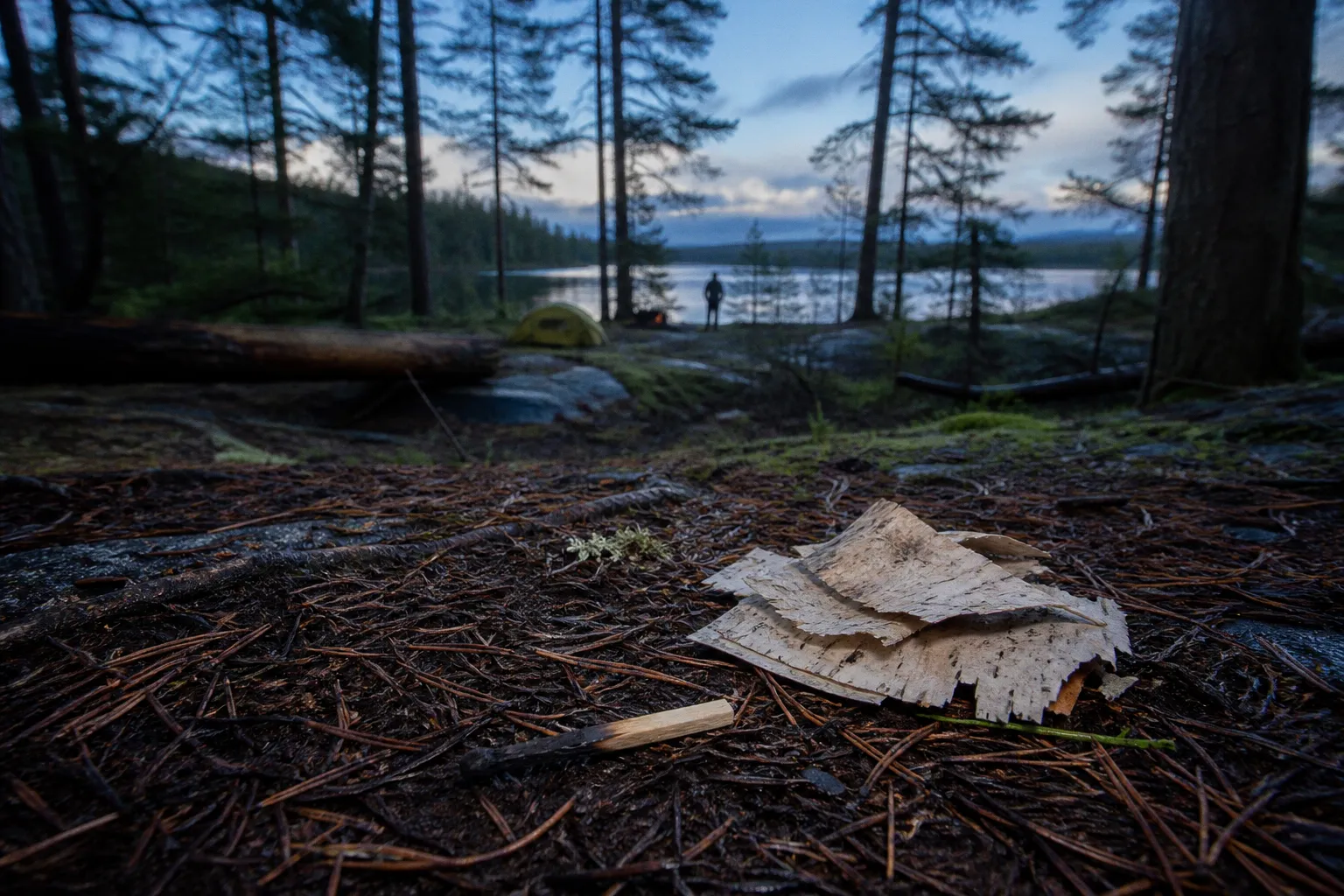
A wilderness survival book can tell you how to orient a map. It cannot tell you whether you can orient one when the trail has vanished under snow, your hands are cold, daylight is draining, and the group is looking at you for an answer.
That gap matters. It is the difference between owning information and being able to deploy it under load. Wilderness survival skills training is not a badge hunt, and it is not an argument against reading. I own plenty of books. I mark them up. I use them to plan. But paper does not build timing, judgment, grip strength, or calm decision-making. Those only arrive when you practice the work.
The wilderness does not test what you highlighted. It tests what you can do after your plan starts shredding.
The gap between knowing and doing
Most outdoor failures are not caused by people knowing absolutely nothing. They happen because people know a concept in clean, comfortable conditions and mistake that for competence.
They watched a knot tutorial. But they have never tied that knot with wet cordage, numb fingers, and a headlamp clamped between their teeth.
They read about fire lays. But they have never processed damp fuel after three days of rain, when every twig near camp feels like a soaked sponge and their cheap folding saw is binding in green wood.
They understand that hypothermia is dangerous. But they have never had to stop a shivering, exhausted partner from burning through their remaining heat while the group debates whether to push on.
That is why I have little patience for the “survival school vs self-taught” debate when people treat it as an all-or-nothing fight. Self-teaching has a place. It builds vocabulary. It lets you study systems before you spend money. It gives you the baseline required to ask better questions.
But self-teaching becomes a problem when it stays frictionless.
A book gives you the sequence. Field practice reveals the weak link in that sequence:
- Your tarp setup may work on a lawn but fail because you cannot find anchors in scree or deep snow.
- Your water-treatment plan may be sound on paper but grind to a halt when your filter clogs, freezes, or gets left in the wrong pocket overnight.
- Your “three ways to start a fire” may actually mean one way, using one tool, with dry materials you carried from home.
- Your emergency food may exist in the pack but be useless if your group has already eaten into it because the route took longer than expected.
The National Park Service’s Ten Essentials framework is built around categories of preparedness, not a talismanic pile of products. That distinction is worth sitting with. Gear is not preparedness. Gear is a toolset. Preparedness is the ability to use that toolset, improvise around its failures, and make an early decision before a small error torques into a rescue.
A survival kit is only as useful as the hands, habits, and judgment behind it.
Books are not worthless. Far from it. The person who refuses to study is just volunteering to learn every lesson the expensive way. But a book is the briefing. Training is the rehearsal. The field is the audit.
Navigation needs muscle memory, not screen confidence
Navigation is where false confidence gets ugly fast.
I keep seeing hikers treat a GPS track as a leash. As long as the blue dot moves, they assume they are fine. Then the device loses signal in a narrow valley, the battery collapses in the cold, the downloaded map does not show the terrain detail they need, or the track leads them into a bad decision they should have rejected with their own eyes.
National Park Service guidance is plain: carry a map, compass, and GPS system, and know how to use them before heading out. A phone is not a substitute for the Ten Essentials. Battery life and service are finite. A backup paper map remains the grown-up move even when you have offline maps downloaded.
On off-trail terrain or snow-covered routes, the stakes rise. Olympic National Park specifically notes that map-and-compass navigation and route-finding skills become mandatory in those conditions, and that GPS reception can be unreliable in deep valleys or heavily vegetated wilderness. That is not a regional quirk. It is a clean example of a universal principle: electronic navigation is a layer, not a foundation.
What practice actually builds
Map-and-compass work is not difficult in the mystical sense. It is difficult because it requires repeated small actions until they become automatic.
You need to be able to:
1. Read terrain before you need an answer. Contour lines are not decorative brown spaghetti. They show ridges, draws, benches, cliffs, drainage patterns, and the steepness that will wreck your pace. Practice matching a map to the land while you are still on an obvious trail. Do not wait until the trail disappears.
2. Set and use a bearing without turning it into a ceremony. The mechanical steps are easy indoors. Outdoors, your bearing has to translate into a route that avoids a cliff band, thick alder, unstable snow, or an impassable creek. A correct bearing can still produce a stupid line.
3. Handle declination for the area you are actually visiting. Declination is location-specific and changes over time. For example, Olympic National Park reports its local magnetic declination at roughly 15.5 degrees east, moving west annually. Do not memorize that number and drag it across the continent. Learn the process, then verify the local value before the trip.
4. Navigate with deliberate checkpoints. Pick features you can confirm: a creek junction, a saddle, a distinct spur, a lake outlet. If you hike for an hour with no confirmation, you are not navigating. You are hoping with expensive electronics.
5. Recover from uncertainty early. Stop. Pin down the last place you knew for certain. Check the terrain. Check direction of travel. Do not keep walking just because movement feels productive. Distance amplifies a navigation error. So does ego.
I teach people to run short off-trail navigation drills in safe terrain first. Set a point a few hundred meters away. Navigate to it without staring at the phone. Then verify. Repeat in rain. Repeat at dusk. Repeat after you have climbed hard enough to elevate your heart rate and muddy your thinking.
That is how the skill enters your kinetic chain. Eyes, brain, hands, feet. Observe. Decide. Move. Reassess.
A compass hanging from your chest does not make you navigationally competent any more than trail runners in your closet make you conditioned for a steep descent.
First aid is physical work with consequences
Wilderness first aid is another place where people confuse certification with capability.
A Wilderness First Aid course is often the right starting point for hikers, climbers, paddlers, and trip leaders operating where help may be delayed by hours rather than minutes. Wilderness Medicine Education Collaborative standards list a minimum of 16 total course hours, all of them in person, for WFA. The American Red Cross wilderness and remote first-aid course is also listed at 16 hours and requires current adult CPR/AED certification.
That is solid entry-level training. It is not a force field.
A 16-hour course cannot make you fully ready for every multi-day expedition, remote river corridor, winter traverse, or no-communication objective. It can give you a framework. It can put you through scenarios. It can show you how quickly a routine injury becomes a group-management problem once evacuation time stretches out.
The physical part is what books cannot deliver.
You need to feel what it takes to work around uneven ground. You need to communicate while wind is stripping words out of the air. You need to manage layers, shelter, patient comfort, group anxiety, and time. You need to understand that the person providing care may be tired, wet, hungry, and carrying a pack. The responder is part of the incident scene, not some clean-handed observer standing beside it.
ASTM’s wilderness and delayed-transport guidance makes the point directly: responders in these settings may need additional training and must understand the physical requirements of the environment and the skills being performed. Exactly right. Remote care is not just urban first aid with more trees around it.
Why scenario training earns its keep
The better outdoor emergency response training puts you into controlled messes. You assess a simulated patient. You solve problems with limited gear. You get pushed to communicate clearly and make decisions in sequence rather than bouncing from one alarming detail to another.
NOLS’ Wilderness First Responder curriculum, which runs roughly nine to ten days, combines theory with hands-on skills, outdoor scenarios in varying weather, realistic rescue situations, and both written and practical assessments. That structure matters. Written knowledge checks whether you understand. Practical assessment checks whether you can function.
Those are different tests.
Here is the blunt version: if your only exposure to emergency response is reading a chapter and packing a first-aid kit, you are carrying medical supplies you have not stress-tested. That may still be better than carrying nothing. But do not pretend it is the same as training.
Your first-aid kit should also reflect your skills, group size, trip length, remoteness, and the likely delay to professional help. A tiny kit built for a short trail run is not the same toolset you need for a week in rough country with a party of six. More gear is not automatically better, either. If you cannot identify it, use it within your training, or keep it organized in bad weather, you have just added weight and confusion.
In the backcountry, treatment is only one job. Keeping the whole group functional is the other.
Bushcraft drills expose weak gear and weaker systems
Practical bushcraft courses can be useful, but only if they teach more than campfire theater.
I am not interested in somebody posing with a giant knife, feather-sticking perfect curls from kiln-dried wood, then declaring themselves prepared for the backcountry. That performance sells clips. It does not necessarily solve real problems.
Useful hands-on survival drills create constraints. Limited daylight. Damp fuel. A tarp instead of a heated cabin. A fixed amount of water. A route that requires observation. A task that must be completed after hiking in, not while fresh beside a parking lot.
The point is not to make discomfort a personality. The point is to learn where your system breaks.
For a basic overnight drill, I want to see a person do the following with their normal trip kit:
- Select a camp location that manages wind exposure, drainage, overhead hazards, and access to water without trampling the site into a mud pit.
- Pitch their shelter fast enough to stay ahead of incoming weather, then make adjustments when the first setup sags or catches wind.
- Produce safe, sustained warmth only where fires are permitted and conditions allow it, while still having an insulation-and-shelter plan that does not depend on flames.
- Treat water with the method they carry and maintain a backup method appropriate to their route.
- Prepare food without scattering packaging, burning a meal, or draining the fuel canister through sloppy stove use.
- Navigate a short route away from the campsite and return without letting the phone make every decision.
- Pack down without leaving litter, damaged vegetation, or an obvious trace of their “survival” experiment.
That last point matters. Wilderness competence includes restraint. Do not rip apart standing vegetation to build a shelter you do not need. Do not manufacture a fire emergency to prove you can manage one. Do not practice destructive skills in places that cannot absorb the impact.
The best training often looks boring from a distance. It is repetition. It is refining a tarp pitch until you can tension it cleanly. It is learning how much fuel you actually use in cold conditions. It is carrying water for an extra hour so you stop treating every questionable source as a convenience store.
And yes, it is discovering that the knife you bought because an influencer called it “indestructible” is awkward for food prep, terrible for fine work, and too heavy for what it contributes. Good. Better to learn that on a training weekend than when you are hauling unnecessary steel over a pass.
Risk management is a moving target
Survival is rarely a single dramatic problem. More often it is a stack of ordinary mistakes that no one interrupts.
The route takes longer than planned. Someone is underfed. The weather shifts. A creek crossing rises. The group pushes forward because turning around feels like failure. Then a small injury lands on top of fatigue, and the margin is gone.
That is why dynamic risk management belongs in wilderness survival skills training. You are not trying to predict every problem. You are building the habit of updating your plan as conditions change.
I use a simple set of questions at trail junctions, major terrain changes, and weather shifts:
| Field question | What it forces you to assess |
|---|---|
| Where are we, and how do we know? | Navigation confidence, not just a device reading |
| What has changed since the trailhead? | Weather, pace, water, injuries, morale, terrain |
| What is the next irreversible commitment? | Ridge, river crossing, snow slope, cliffed route, darkness |
| What is our turnaround or bailout option? | Real alternatives before the situation narrows |
| What resource are we burning fastest? | Time, daylight, calories, water, warmth, battery, group focus |
This is not bureaucracy. It is how you stop momentum from driving the trip.
The National Park Service recommends carrying an extra day’s food for unexpected delays. That is not a license to wander recklessly. It is an acknowledgment that delays happen. Routes close. Weather pins people down. A slow member needs more time. Navigation gets complicated. Your plan should have slack built into it.
The same goes for communication. A phone can be useful. Offline maps can be useful. Satellite communicators can be useful. But none of them erase the need for route planning, local-condition checks, emergency gear, or the ability to make a conservative call. Cell coverage is patchy through much wilderness terrain. Anyone who has tried to send a message from a steep drainage already knows that reality.
The hard decision is usually made earlier than people think. You turn around before the creek becomes unmanageable. You camp before darkness makes site selection careless. You eat and layer up before the group gets cold and stupid. You call the route before one person starts dragging a bad knee downhill.
That is not quitting. That is competent load management.
Build training around the trips you actually take
A wilderness survival certification can be useful, especially when it includes in-person practice and evaluation. It gives you a curriculum, an instructor’s feedback, and a reason to train skills you might otherwise avoid. But the certificate is not the finish line. It is a receipt for training time.
Build your competence around exposure, not fantasy.
A person who hikes maintained trails near help needs a different depth of preparation than a person leading multi-day trips through off-trail country. Add winter travel, remote water crossings, technical terrain, children, or a group responsibility, and the required skill level climbs fast.
Here is the progression I recommend to people who want real capability instead of a survival-themed hobby:
1. Master your standard kit close to home. Use your actual shelter, stove, water system, layers, repair items, and navigation tools on low-consequence overnights. Stop saving gear for the “big trip.” The big trip is the wrong place for first use.
2. Practice one failure at a time. Navigate without your phone for an hour. Set up shelter after dark in a legal campsite. Simulate a lost trekking pole or a wet insulation layer. Learn the failure mode without creating danger.
3. Take an in-person first-aid course. A 16-hour WFA course can establish an entry-level foundation for many recreational users, particularly when help is expected within hours. Keep CPR/AED requirements current if your course requires them. Then refresh. Skills decay when they sit untouched.
4. Train with people who are better than you. Not louder. Better. Find mentors who explain their decisions, respect local regulations, and know when conditions exceed the group’s ability. Avoid instructors whose entire brand is macho deprivation.
5. Review every trip honestly. What did you carry but never use? What did you need but lack? Where did pace slip? Which decision was late? This is where field judgment gets sharpened. No ego. Just data.
The goal is not to become a wilderness superhero. That mindset gets people hurt. The goal is to become hard to surprise.
You should know how your body handles a loaded climb, how your footwear behaves when wet, how fast you can set camp, how long your fuel lasts, how your group communicates under pressure, and when your navigation starts degrading. That is useful knowledge. It has sweat on it.
The book belongs in the pack. So does the practice.
Read the books. Study maps. Watch demonstrations from credible instructors. Learn the language before you step into a course. All of that makes hands-on training more productive.
Then get outside and let the field correct you.
Run the compass drill. Pitch the shelter in rain. Take the first-aid course with scenarios instead of just slides. Practice your systems on ordinary weekends until the motions stop feeling precious and start feeling normal. Build capacity before you need it.
Because the wilderness does not care how much content you consumed. It cares whether, when the weather turns and the route gets messy, you can still make the next sound decision.